How to Maximize Your 401(k) Contributions and Grow Your Retirement Fund


Planning for retirement is one of the smartest financial decisions you can make, and a 401(k) remains one of the most powerful tools for building long-term wealth. With rising living costs and longer life expectancy, maximizing your retirement savings has become more important than ever. According to The Motley Fool, a 401(k) offers tax advantages, employer matching opportunities, and long-term investment growth that can significantly improve your financial future.
Understand How a 401(k) Works
A 401(k) is an employer-sponsored retirement savings plan that allows employees to contribute a portion of their paycheck into investment accounts. These contributions are usually made before taxes, reducing taxable income while allowing investments to grow tax-deferred over time. Some employers also offer Roth 401(k) options, where contributions are made after taxes but withdrawals in retirement are tax-free.
The real power of a 401(k) comes from compound growth. The earlier and more consistently you contribute, the more time your investments have to grow.
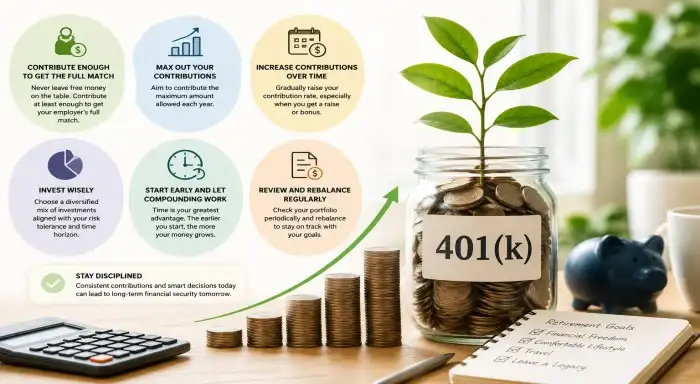
Contribute Enough to Get the Full Employer Match
One of the biggest mistakes employees make is failing to take full advantage of employer matching contributions. Many companies match a percentage of your contributions, which is essentially free money added to your retirement account.
For example, if your employer matches 50% of contributions up to 6% of your salary, contributing at least 6% ensures you receive the maximum match available. Skipping this benefit means leaving money on the table.
Increase Contributions Gradually
If maximizing your 401(k) feels difficult, start by increasing contributions slowly. Even raising your contribution by 1% each year can make a major difference over time.
Many retirement experts recommend saving around 15% of your annual income for retirement, including employer contributions. Automatic contribution increases can help you build savings without dramatically affecting your lifestyle.
Take Advantage of Annual Contribution Limits
The IRS increases 401(k) contribution limits periodically. For 2026, eligible employees can contribute up to $24,500 annually, with additional catch-up contributions available for workers aged 50 and older.
If possible, aim to increase contributions whenever you receive:
- A salary raise
- Bonus payments
- Tax refunds
- Reduced debt obligations
Using extra income for retirement savings can accelerate long-term wealth growth significantly.
Choose the Right Investment Options
Your 401(k) contribution amount matters, but investment selection also plays a critical role in growing your retirement fund.
Common investment choices include:
- Target-date funds
- Index funds
- Mutual funds
- Bond funds
- Large-cap and small-cap stock funds
Many financial experts recommend diversified, low-cost index funds because they typically offer broad market exposure with lower fees. Reddit users in personal finance communities also frequently suggest target-date funds for beginners because they automatically adjust risk as retirement approaches.
Avoid Early Withdrawals
A 401(k) is designed for retirement, not short-term spending. Early withdrawals before age 59½ usually trigger taxes and penalties, reducing long-term growth potential.
Even a small withdrawal today could mean losing thousands of dollars in future compound earnings. Instead of tapping retirement savings, build a separate emergency fund for unexpected expenses.
Consider a Roth 401(k)
If your employer offers a Roth 401(k), it may be worth considering depending on your financial situation. Traditional 401(k) contributions reduce taxes now, while Roth 401(k) contributions provide tax-free withdrawals during retirement.
A Roth 401(k) can be especially beneficial for younger workers who expect to be in a higher tax bracket later in life.
Monitor Fees and Investment Performance
High investment fees can quietly reduce retirement savings over time. Review your 401(k) plan regularly and compare expense ratios across investment options.
Lower-cost funds often leave more money invested and growing over the long term. Even a small difference in annual fees can impact retirement balances significantly over decades.
Diversify Your Retirement Portfolio
Diversification helps reduce investment risk by spreading money across different asset types and industries. Financial communities on Reddit often emphasize the importance of avoiding overconcentration in a single stock or sector.
A diversified portfolio may include:
- U.S. stocks
- International stocks
- Bonds
- Target-date retirement funds
This balanced approach can help protect your retirement savings during market volatility.
Rebalance Your Account Regularly
As markets fluctuate, your investment allocation may drift from your original goals. Rebalancing ensures your portfolio maintains the right balance between risk and growth.
For example, younger investors may prefer a higher percentage of stocks for growth, while older investors often shift toward more conservative investments like bonds.
Review your account at least once or twice a year to keep your retirement strategy aligned with your goals.
Keep Contributing During Market Downturns
Market volatility can feel stressful, but stopping contributions during downturns may hurt long-term growth. Continuing to invest during lower market periods allows you to purchase investments at reduced prices.
Historically, consistent investing over long periods has helped investors benefit from market recoveries and compound growth.
Roll Over Old 401(k) Accounts Properly
Changing jobs does not mean abandoning old retirement accounts. You can roll over your old 401(k) into a new employer plan or an IRA to avoid taxes and penalties. Direct rollovers are generally the safest option because funds move directly between accounts.
Consolidating retirement accounts can also make investment management easier.
Final Thoughts
Maximizing your 401(k) contributions is one of the most effective ways to build long-term financial security. By contributing consistently, capturing employer matches, choosing smart investments, and avoiding unnecessary withdrawals, you can significantly grow your retirement fund over time.
Resources from The Motley Fool provide valuable insights into retirement planning, investment strategies, and 401(k) management for both beginners and experienced investors. Starting early and staying consistent can make a substantial difference in your future financial freedom.