The Rise of Fully Digital Car Loans: Comparing Traditional Dealership Financing vs. Online Platforms

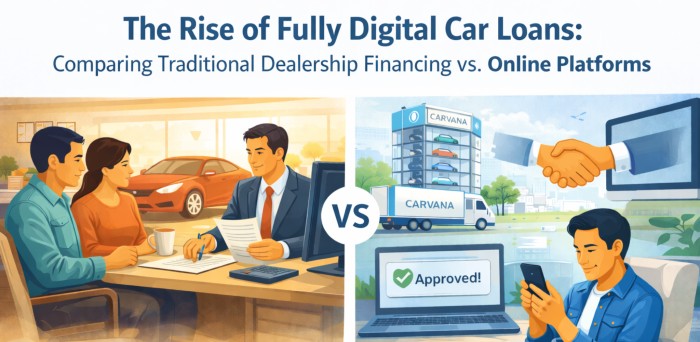
The auto financing landscape in the United States is undergoing a major transformation. For decades, buyers relied on in-person dealership financing—sitting across a desk, negotiating rates, and filling out paperwork. Today, fully digital lending platforms are reshaping that experience, allowing consumers to secure car loans from their couch in minutes. This shift is driven by technology, transparency demands, and changing consumer expectations for speed and convenience.
The Traditional Dealership Financing Model
Traditional dealership financing has long been the standard route for car buyers. In this model, a dealership acts as an intermediary between the customer and lending institutions. After selecting a vehicle, buyers submit a credit application, wait for approval, and review loan offers arranged by the dealership’s finance office.
While this process can be convenient—since everything happens in one place—it often lacks transparency. Buyers may not know which lenders are being consulted or how interest rates are determined. Negotiations can be time-consuming, and financing terms may not be clear until late in the purchase process.
Another limitation is timing. Dealership financing usually requires a physical visit during business hours. For busy professionals or families, this can make car buying feel like a lengthy, stressful commitment rather than a straightforward transaction.
How Fully Digital Car Loans Work
Digital auto financing platforms streamline the entire process. Instead of waiting at a dealership, buyers complete an online form and receive loan offers almost instantly. Companies such as Carvana pioneered this approach by integrating vehicle shopping and financing into a single digital ecosystem.
Most online platforms use soft credit checks during pre-qualification, meaning consumers can explore loan options without affecting their credit score. Once a buyer selects a vehicle and accepts terms, they can finalize paperwork electronically and schedule home delivery or pickup.
These systems rely on automated underwriting algorithms that evaluate creditworthiness quickly. By eliminating manual processing, lenders can provide real-time decisions and personalized offers tailored to a buyer’s financial profile.
Transparency and Control for Buyers
One of the biggest advantages of digital financing is transparency. Online platforms typically display loan terms, interest rates, and monthly payments upfront. Buyers can compare multiple options side by side, adjust down payments, and instantly see how changes affect their monthly costs.
This level of control contrasts with traditional dealership financing, where buyers may feel pressure to accept terms quickly. Online systems let consumers review offers at their own pace, helping them make informed financial decisions.
Additionally, digital platforms often allow shoppers to browse vehicles based on budget rather than sticker price. This payment-first approach aligns more closely with how most Americans actually shop for cars—focusing on affordability instead of total cost.

Speed and Convenience in the Digital Era
Speed is another major factor driving the rise of online auto loans. Traditional financing can take hours or even days if additional documentation is required. Digital platforms compress that timeline dramatically. Many buyers can complete the entire process—from pre-qualification to approval—in under 30 minutes.
Convenience also plays a critical role. Online financing is available 24/7, eliminating the need to schedule dealership visits. Documents can be uploaded instantly, and electronic signatures replace stacks of paperwork.
For younger buyers who are accustomed to digital banking, online mortgage applications, and mobile payments, this streamlined approach feels natural. As a result, digital auto lending is becoming especially popular among millennials and Gen Z consumers entering the car market.
Potential Drawbacks of Each Option
Despite its advantages, digital financing isn’t perfect. Some buyers prefer face-to-face interaction, especially when making a major purchase. Dealership financing can provide immediate human assistance, which may be reassuring for first-time buyers or those with complex financial situations.
On the other hand, traditional dealership loans sometimes include markups or add-on products that increase total costs. Without careful review, buyers may end up paying more than they expected.
Online platforms also require buyers to be comfortable navigating digital tools and reviewing financial terms independently. Those unfamiliar with online transactions may find the process less intuitive than speaking with a finance manager in person.
The Future of Auto Financing
Industry trends suggest that digital car loans will continue gaining market share. As lenders invest in artificial intelligence, identity verification technology, and secure digital contracts, the process will become even faster and more personalized.
Rather than replacing dealerships entirely, online financing is likely to coexist with traditional methods. Many dealerships are already adopting hybrid models—offering online pre-approval tools alongside in-store services—to meet evolving customer expectations.
Final Thoughts
The rise of fully digital car loans represents a fundamental shift in how Americans finance vehicles. Online platforms deliver speed, transparency, and convenience that traditional dealership financing often struggles to match. At the same time, in-person financing still holds value for buyers who want guidance or personal interaction.
Ultimately, the best option depends on individual preferences. But one thing is clear: as technology continues to reshape financial services, digital auto lending is no longer just an alternative—it’s quickly becoming the new standard.