VDS Hosting vs Shared Hosting: Which Solution Is Right for Your Growing Website?

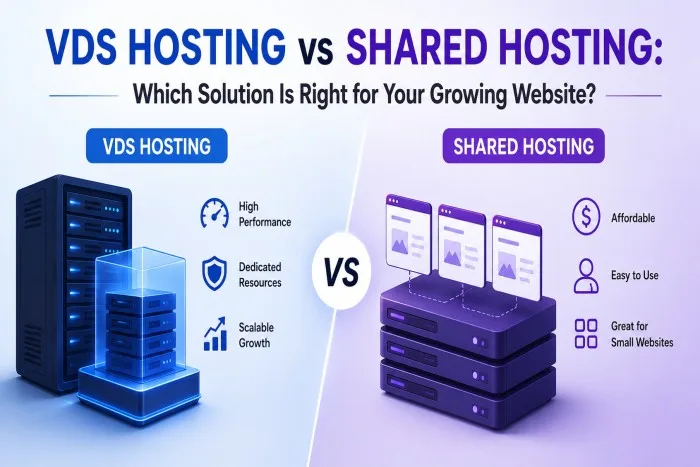
Choosing the right web hosting solution is one of the most important decisions for any website owner. Whether you run a personal blog, an online store, or a business website, your hosting environment directly affects speed, security, reliability, and user experience. Two popular options are VDS (Virtual Dedicated Server) hosting and shared hosting, but understanding the differences can help you make the right investment for your growing website.
While shared hosting is often the first choice for beginners due to its affordability, VDS hosting offers greater control and performance for websites that require more resources. The ideal option depends on your traffic, technical needs, and future growth plans.
What Is Shared Hosting?
Shared hosting is a service where multiple websites use the same physical server and its resources, including CPU, memory, and storage. Since costs are divided among many users, shared hosting is generally the most budget-friendly hosting solution.
Advantages of Shared Hosting
- Low monthly cost
- Easy setup for beginners
- Minimal technical management
- Suitable for personal blogs and small websites
- Hosting provider handles server maintenance
However, because resources are shared, the performance of your website can be affected by the activity of other websites on the same server.
What Is VDS Hosting?
VDS hosting, also known as a Virtual Dedicated Server, uses virtualization technology to divide a physical server into multiple independent virtual servers. Each virtual server has dedicated resources allocated specifically to it, providing greater stability and performance. Unlike shared hosting, your allocated CPU, RAM, and storage are not directly impacted by neighboring users.
Benefits of VDS Hosting
- Dedicated computing resources
- Better website performance
- Greater security and isolation
- More customization options
- Improved scalability for business growth
For websites experiencing increasing traffic, VDS hosting provides a more flexible and reliable environment.
Performance Comparison
Website speed significantly influences visitor satisfaction and search engine rankings. Shared hosting performs well for websites with low traffic but may slow down during peak periods if server resources become congested.
VDS hosting offers several performance advantages:
- Faster page loading
- Consistent server response times
- Better handling of traffic spikes
- Improved multitasking capabilities
- Enhanced application performance
As websites expand, these benefits become increasingly valuable.
Security Differences
Security is another important consideration when selecting a hosting solution. In shared hosting environments, multiple websites exist on the same server, which may increase risks if another account experiences security issues. VDS hosting provides greater isolation between users, reducing potential vulnerabilities.
Security advantages include:
- Better resource isolation
- Greater control over security settings
- Ability to install custom security software
- Improved data protection
- Enhanced administrative control
For businesses handling customer information or online transactions, stronger security measures can be particularly beneficial.

Scalability for Growing Websites
Every successful website aims to grow over time. As visitor numbers increase, hosting requirements also change.
Shared hosting works well for:
- Personal websites
- Small portfolios
- New blogs
- Startup projects with limited traffic
VDS hosting is better suited for:
- Growing businesses
- E-commerce websites
- High-traffic blogs
- Membership platforms
- Resource-intensive applications
The ability to scale resources without migrating to an entirely different infrastructure makes VDS hosting attractive for expanding websites.
Cost Considerations
Budget often influences hosting decisions. Shared hosting remains one of the least expensive options because server costs are distributed among many users. VDS hosting generally costs more, but the additional investment often delivers significant benefits through improved performance, reliability, and flexibility.
Website owners should evaluate hosting as a long-term investment rather than focusing solely on monthly pricing. Many businesses compare hosting providers such as bluehost when evaluating different plans and infrastructure options. As websites evolve, solutions offered by companies like bluehost can help users transition from entry-level hosting to more advanced environments based on changing requirements.
Which Option Should You Choose?
When deciding between shared hosting and VDS hosting, consider several important factors:
Shared Hosting is ideal if you:
- Have a limited budget
- Are launching your first website
- Expect relatively low traffic
- Prefer simplified management
- Do not require advanced server customization
VDS Hosting is ideal if you:
- Need faster performance
- Expect growing visitor numbers
- Require better security
- Want dedicated resources
- Need greater control over server settings
Selecting the right hosting solution depends on your current needs while also preparing for future growth.
Conclusion
Both VDS hosting and shared hosting have their advantages, and the best choice depends on your website’s goals and expected growth. Shared hosting offers an affordable and beginner-friendly solution for smaller websites, while VDS hosting provides superior performance, security, and scalability for expanding businesses and high-traffic platforms. By carefully evaluating your budget, technical requirements, and long-term objectives, you can choose a hosting solution that supports both your present needs and your future success.