Long-Range Moped-Style E-Bikes: What Affects Battery Performance and Riding Distance?

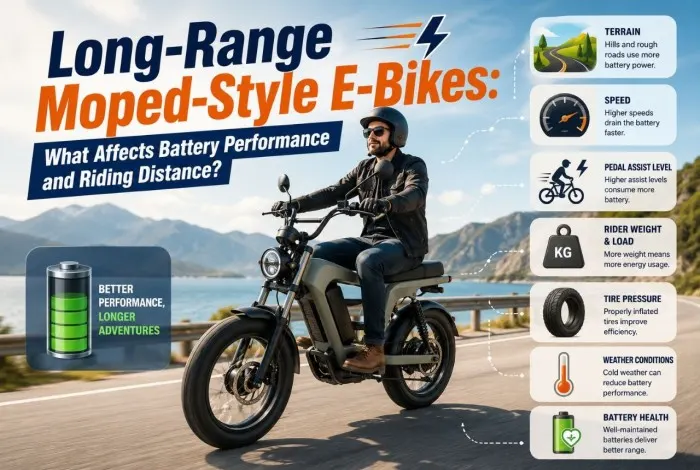
Moped-style e-bikes with their comfortable seating, step-through frames, and powerful motors have become popular for daily commuting and leisure rides. Long-range models promise extended adventures without frequent recharging, but real-world performance varies significantly. Understanding the key factors that influence battery life and riding distance helps riders choose wisely and get the most from their investment.
Battery Capacity and Chemistry
The foundation of any e-bike’s range is its battery. Higher capacity batteries, measured in watt-hours (Wh), naturally provide longer distances. A 500Wh battery might deliver 30-50 miles per charge, while 750Wh or larger packs can push ranges toward 60-80 miles under ideal conditions.
Lithium-ion batteries dominate the market due to their balance of weight, capacity, and lifespan. Different chemistries offer trade-offs — some prioritize energy density for longer range, while others focus on longevity and safety. Premium cells maintain performance better over hundreds of charge cycles, making them worth considering for frequent riders.
Motor Power and Efficiency
The motor’s wattage and efficiency directly impact how quickly the battery drains. Higher-power motors (750W+) deliver strong acceleration and better hill-climbing ability but consume more energy. Efficient mid-drive motors often provide better range than hub motors because they leverage the bike’s gears for optimized power delivery. Pedal-assist levels play a crucial role. Using lower assist modes preserves battery while still providing helpful support. Many riders find that a mix of pedaling and moderate assist yields the best balance of effort and distance.
Rider Weight and Cargo
Total system weight significantly affects range. Heavier riders or those carrying cargo, panniers, or passengers will see reduced distances compared to solo lightweight riders. Moped-style e-bikes often feature sturdy frames and racks designed for practical use, but added weight requires more power to move. Distributing weight evenly and using efficient packing methods helps maximize range. Some models include suspension systems that improve comfort but can slightly impact efficiency on rough terrain.
Terrain, Weather, and Riding Style
Hilly routes drain batteries faster than flat paths. Strong headwinds, cold temperatures, and frequent stops also reduce range. Cold weather particularly affects lithium batteries, sometimes cutting effective capacity by 20% or more until the pack warms up.
Aggressive riding with frequent throttle use consumes more power than smooth, steady pedaling. Maintaining consistent speeds and anticipating stops helps preserve energy. Tire pressure makes a surprising difference — properly inflated tires reduce rolling resistance and improve efficiency.
Practical Tips for Maximizing Range
Several habits help extend riding distance:
- Use the lowest effective assist level for the terrain
- Maintain optimal tire pressure and keep the bike clean
- Avoid extreme temperatures when possible
- Charge batteries indoors or in moderate conditions
- Remove unnecessary accessories that add weight or drag
- Plan routes with fewer hills when range is critical
Many modern moped-style e-bikes include smart displays showing estimated remaining range based on current usage. Learning to interpret these readings helps with trip planning. Actbestbike offers well-designed long-range moped-style models with thoughtful battery systems and efficient components tailored for real-world commuting needs.
What to Look for When Buying
When evaluating long-range e-bikes, consider more than just advertised maximum range. Real-world figures are usually 60-80% of claimed distances under mixed conditions. Look for removable batteries for easy charging, quality BMS (Battery Management System) protection, and transparent specifications from reputable manufacturers.
Warranty coverage on the battery is particularly important, as this component represents a significant portion of the bike’s value. Models with user-replaceable batteries offer better long-term ownership experiences.
The Future of E-Bike Range
Battery technology continues advancing rapidly. Higher energy density cells, improved thermal management, and more efficient motors are extending practical ranges while keeping weights manageable. Regenerative braking systems that recapture energy during descents are becoming more common, further improving efficiency.
For daily commuters and weekend adventurers, understanding these factors empowers better decisions. A well-chosen long-range moped-style e-bike can reliably replace short car trips while delivering an enjoyable riding experience.
By considering battery capacity, motor efficiency, riding conditions, and maintenance habits, riders can confidently select and operate moped-style e-bikes that meet their distance needs. The combination of comfort, style, and practical range makes these vehicles an excellent choice for modern transportation.