Are Moped-Style eBikes Legal? A Guide to Rules, Regulations, and Licensing

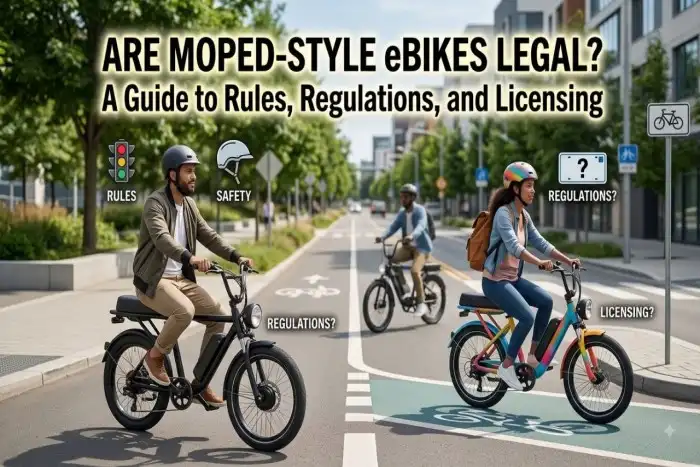
Moped-style electric bikes have grown rapidly in popularity thanks to their upright seating, practical design, and electric assistance. Many riders are drawn to them as an easy alternative to cars for short trips. However, their legal status is not always straightforward. Because these bikes often look and perform differently from traditional bicycles, they can fall under different rules depending on where you live. Understanding the key factors that determine legality is essential before you buy or ride one.
What Makes a Bike “Moped-Style”?
Moped-style e-bikes typically feature a step-through or step-over frame, a more upright riding position, floorboards or wide foot placement, and sometimes larger batteries or higher power outputs. While many are designed to qualify as electric bicycles, others approach the performance of traditional mopeds or scooters. This gray area is where legal questions often arise.
The critical distinction usually comes down to speed, motor power, and whether the bike has operable pedals. Vehicles that rely primarily on throttle power and exceed certain speed thresholds are more likely to be classified as mopeds or motorized vehicles rather than bicycles.
How Most Regions Classify Electric Bikes
Many places use a tiered system to regulate e-bikes. Lower-powered models with pedal assistance and limited top speeds are often treated like conventional bicycles. Higher-powered or faster models may require registration, licensing, insurance, or specific safety equipment.
In general, regulators look at three main factors:
- Maximum assisted speed
- Motor power output
- Presence of functional pedals
If a moped-style e-bike stays within the limits set for electric bicycles in your area, it is usually legal to ride without a motorcycle license. Once it exceeds those limits, additional requirements typically apply.
Licensing, Registration, and Insurance
Requirements vary widely. In some jurisdictions, low-speed moped-style e-bikes need no license or registration. In others, any vehicle capable of higher speeds or equipped with a throttle may need a driver’s license, vehicle registration, and liability insurance. Helmet rules also differ—some areas mandate helmets for all motorized bikes, while others only require them for certain age groups or vehicle classes.
Because enforcement can be inconsistent, riders sometimes assume a bike is legal simply because it was sold as an “e-bike.” This assumption can lead to fines or confiscation if local rules treat the vehicle differently. Actbestbike offers several moped-style models designed with practicality and compliance considerations in mind, but riders still need to confirm how those models fit within their local regulations.
Key Questions to Ask Before Buying
Before purchasing a moped-style e-bike, clarify the following:
- What is the motor’s continuous power rating?
- What is the maximum assisted or throttle speed?
- Does the bike have functional pedals that can propel it independently?
- Are there local restrictions on throttle-only operation?
- Do age, helmet, or registration rules apply?
Manufacturers and retailers should be able to provide technical specifications. Comparing those details against your regional transportation rules is the most reliable way to determine legality.
Where You Ride Matters
Even when a moped-style e-bike is legal, where you can ride it may be restricted. Some paths, bike lanes, and multi-use trails prohibit higher-powered or throttle-equipped bikes. Sidewalks are often off-limits. Road use may be allowed only if the bike meets specific equipment standards such as lights, reflectors, and mirrors. Riders should also consider parking and storage rules, especially in cities with strict regulations on motorized vehicles.
Practical Tips for Staying Compliant
Start by checking official government transportation or motor vehicle websites for your country, state, or city. Rules change, and online summaries can become outdated. When in doubt, contact local authorities or a knowledgeable dealer who understands regional requirements. Keep documentation of your bike’s specifications. If stopped, being able to show that the motor power and speed fall within legal limits can be helpful. Regular maintenance of lights, brakes, and reflectors also supports safe and lawful operation.
The Bottom Line
Moped-style e-bikes can be fully legal, partially restricted, or subject to motor-vehicle rules depending on their technical characteristics and local laws. There is no universal answer that applies everywhere. The responsibility rests with the rider to understand the classification of their specific model and the rules that govern its use.
By researching power limits, speed restrictions, licensing requirements, and permitted riding areas before you buy, you can enjoy the convenience of a moped-style e-bike while avoiding unnecessary legal trouble. When chosen and used correctly, these bikes offer a practical and enjoyable way to travel—provided they align with the regulations in your area.