How Domain Privacy Helps Prevent Spam, Scams, and Identity Theft

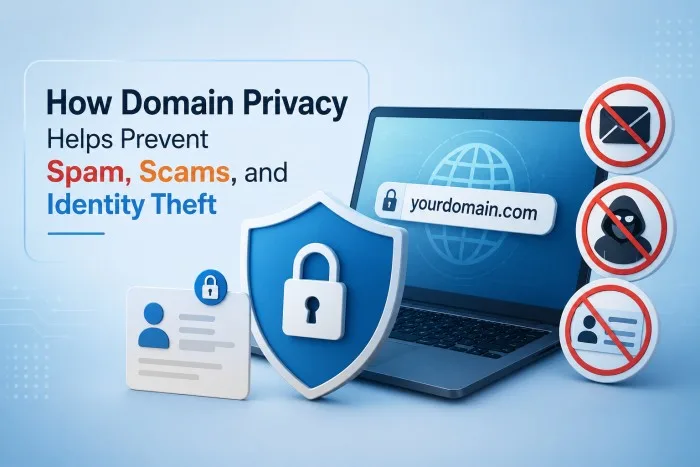
When you register a domain name, your contact details are traditionally recorded in a public database known as WHOIS. This record can include your name, email address, phone number, and physical address. While transparency has its place, publicly listing this information creates real risks. Domain privacy—also called WHOIS privacy or redaction—exists to protect that data. In 2026, it remains one of the simplest and most effective ways to reduce spam, limit scam attempts, and lower the chance of identity-related misuse.
What Domain Privacy Actually Does
Domain privacy replaces your personal contact information in the public WHOIS record with generic details provided by your registrar or a privacy service. Instead of displaying your home address or personal email, the record shows a proxy contact. Legitimate parties who need to reach you—such as for legal notices—can still do so through the privacy service, but casual visitors and automated scrapers cannot easily harvest your details. This small change has a large impact. Public WHOIS data has long been a favorite source for spammers, scammers, and data brokers because it is structured, reliable, and easy to collect at scale.
Reducing Spam and Unwanted Contact
One of the most immediate benefits of domain privacy is a noticeable drop in spam. Once your email address and phone number are no longer publicly listed, automated systems have a harder time adding you to bulk marketing lists or robocall databases. Many domain owners report cleaner inboxes and fewer unsolicited calls after enabling privacy protection.
Without privacy, simply owning a domain can lead to a steady stream of promotional emails, hosting offers, SEO pitches, and low-quality service solicitations. These messages are rarely useful and often serve as entry points for more aggressive sales tactics or phishing attempts.
Limiting Scam and Social Engineering Risks
Scammers frequently use public WHOIS data to make their outreach appear more credible. When they know your name, organization, and contact details, they can craft targeted messages that reference your domain or website. This technique appears in phishing emails, fake renewal notices, and fraudulent support requests.
Domain privacy removes many of the personal details that make these schemes convincing. A scammer who only sees redacted information has less material to work with and is less likely to succeed in social engineering attempts. While no tool eliminates scams entirely, reducing available personal data significantly raises the barrier.
Protecting Against Identity Theft and Misuse
Publicly available addresses and phone numbers can contribute to broader identity risks. Data collected from WHOIS records may be combined with information from other breaches or public sources to build detailed profiles. In some cases, this information has been used for harassment, doxxing, or fraudulent account creation.
Domain privacy does not make someone invisible online, but it does limit one readily accessible source of accurate personal data. For individuals, freelancers, and small business owners who register domains under their own names, this layer of protection is especially valuable. Bluehost offers domain privacy options that help keep personal contact details out of public records while still allowing domains to function normally.
Who Benefits Most from Domain Privacy
Almost every domain owner gains some advantage from privacy protection, but certain groups benefit more than others:
- Individuals using personal names for blogs or portfolios
- Small business owners who do not want home addresses listed
- Freelancers and independent professionals
- Anyone who has previously experienced spam or targeted outreach after registering a domain
Even larger organizations often enable privacy on domains that do not require public technical or administrative contacts.
Common Misconceptions
Some people believe domain privacy is only necessary for high-profile sites or that it interferes with ownership rights. In reality, privacy protection does not change ownership. You remain the official registrant; the service simply shields your details from public view. Others worry that privacy makes it harder to recover a domain or prove ownership. Reputable providers maintain internal records and can assist with verification when needed.
Another misconception is that privacy is no longer relevant because of regulations that already limit data publication. While some regions have strengthened privacy rules, practices still vary globally, and many records remain accessible. Enabling privacy provides consistent protection regardless of jurisdiction.
Best Practices Alongside Domain Privacy
Domain privacy works best as part of a broader security approach. Use strong, unique passwords for your registrar account and enable two-factor authentication. Be cautious with unexpected renewal notices or urgent domain-related messages, even if privacy is active. Keep your contact information current with your registrar so important notices still reach you through official channels. It is also wise to review your domain settings periodically. Confirm that privacy remains enabled and that no unintended changes have occurred during renewals or transfers.
Final Thoughts
Domain privacy is a straightforward but powerful safeguard. By keeping personal contact details out of public WHOIS records, it reduces spam, makes targeted scams more difficult, and lowers exposure to identity-related risks. For relatively little effort and cost, domain owners gain a meaningful layer of protection that supports both peace of mind and long-term online safety. In an environment where personal data is constantly collected and reused, limiting unnecessary exposure remains one of the smartest steps you can take. Enabling domain privacy is a practical place to start.