Do Polarized Sports Sunglasses Actually Help? When You Need Them and When You Don’t

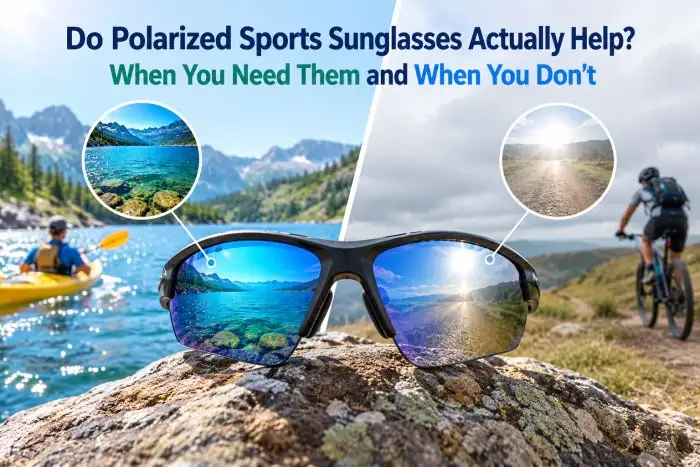
Outdoor activities expose your eyes to bright sunlight, reflected glare, and changing light conditions that can affect comfort and visibility. Polarized sports sunglasses are designed to reduce glare from reflective surfaces, making them useful for certain sports and outdoor adventures. However, they are not necessary for every activity, and their benefits depend on where you exercise, the conditions you face, and the type of visual information you need to see.
How Do Polarized Sports Sunglasses Work?
Polarized sunglasses feature a special filter that blocks much of the horizontally reflected light responsible for glare. This type of glare commonly comes from water, wet roads, snow, and other flat surfaces. By reducing these reflections, polarized lenses can make outdoor environments more comfortable to view.
Regular tinted sunglasses reduce overall brightness, but they do not necessarily filter reflected glare. Polarized lenses combine glare reduction with light filtering, helping users see more clearly in many bright conditions.
However, polarization does not automatically mean better ultraviolet protection. When choosing sunglasses, look for lenses that provide 100% UVA and UVB protection or are labeled UV400. Lens tint, polarization, and UV protection serve different purposes, so each feature should be considered separately.
When Polarized Sunglasses Make a Difference
Water Sports and Fishing
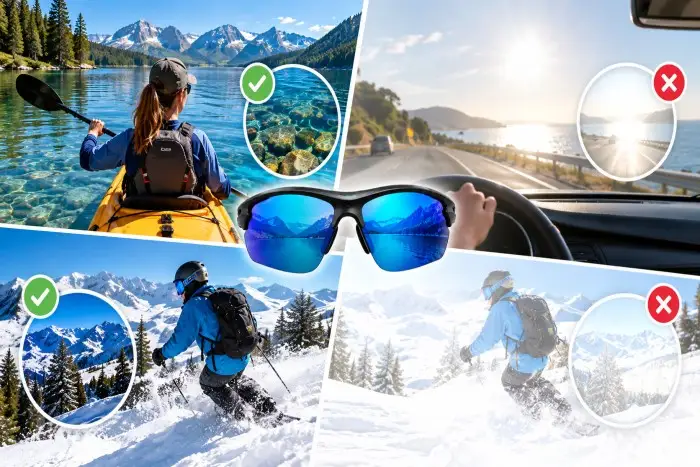
Water reflects sunlight intensely, creating bright patches that can make it difficult to see beneath the surface. Polarized lenses reduce this reflected glare, which can improve visual comfort during fishing, kayaking, boating, and other water-based activities.
Anglers may find it easier to observe underwater structures or fish in suitable conditions. However, visibility still depends on water clarity, sunlight direction, and the surrounding environment. Polarization cannot eliminate every reflection or guarantee that objects beneath the water will be visible.
Cycling and Road Running
Cyclists and runners often encounter sunlight reflected from wet pavement, car windows, and other shiny surfaces. Polarized lenses can reduce uncomfortable glare, especially during daytime training on bright roads.
They may be particularly helpful for recreational cycling and running along coastal routes or open roads. However, cyclists should consider their surroundings carefully. Some digital displays, including certain bike computers and navigation screens, can appear darker or become difficult to read through polarized lenses.
Snow Sports and Bright Outdoor Conditions
Snow reflects substantial sunlight, making glare reduction valuable during some winter activities. Polarized lenses can improve comfort on bright days, although they are not always the best choice for skiing or snowboarding.
Glare can sometimes reveal icy patches and changes in snow texture. Because polarization reduces reflected light, it may make these details less obvious in certain conditions. Dedicated snow goggles with suitable contrast-enhancing lenses may be more appropriate, depending on visibility and terrain.
When You May Not Need Polarized Lenses
Polarized sunglasses are not essential for every outdoor activity. If you exercise primarily in shaded parks, wooded trails, or overcast conditions, ordinary sunglasses with proper UV protection may provide sufficient comfort.
They may also be less suitable for activities that depend on reading digital displays. Some athletes use sports watches, GPS devices, or phone screens while training. Polarization can interfere with screen visibility at certain viewing angles, although the effect varies by device.
Another consideration is changing light. Trail runners and mountain bikers moving between sunlight and dense shade may prefer lenses that balance brightness reduction with clear visibility. A lens that is too dark can make it harder to notice roots, rocks, and other obstacles.
Choosing the Right Sports Sunglasses
The best sunglasses depend on your activity, environment, and personal preferences. Consider the following features when comparing options:
- UV protection: Choose lenses that block 100% of UVA and UVB rays, regardless of whether they are polarized.
- Lens tint: Gray lenses generally preserve natural color perception, while brown or amber lenses can enhance perceived contrast in some conditions.
- Fit and coverage: A secure, comfortable frame helps keep sunglasses in place during movement and reduces sunlight entering from the sides.
- Impact resistance: Sports eyewear should use appropriate impact-resistant materials, particularly for cycling, running, and ball sports.
- Visibility: Make sure the lenses allow you to recognize hazards, read displays, and judge your surroundings accurately.
When comparing athletic eyewear, zennioptical offers options to explore across different frame styles and lens features. Check the specifications of individual products to confirm their UV protection, polarization, fit, and suitability for your chosen sport.
Are Polarized Sports Sunglasses Worth It?
Polarized lenses are most useful when reflected glare is a major problem, particularly around water, wet roads, and bright open environments. They can improve comfort and help reduce visual distractions during many outdoor activities. However, they are not automatically superior for every sport. Activities involving digital screens, changing light, or subtle surface details may call for different lens features.
Ultimately, the smartest choice is to match your sunglasses to your environment rather than buying them based on polarization alone. Prioritize UV protection, impact resistance, comfortable fit, and reliable visibility. With the right combination of features, you can protect your eyes and enjoy outdoor activities with greater confidence.