E-Bike Charging Policies for Campuses: Certification, Battery Safety, and Best Practices


As more students and staff use an e-bike for commuting, campuses need clear policies for charging and storing these vehicles safely. E-bike batteries contain significant amounts of stored energy, so improper charging, damaged equipment, or unsuitable electrical connections can create avoidable risks. A well-designed campus policy should address certified equipment, charging locations, battery inspection, user responsibilities, emergency procedures, and regular maintenance.
Why Campuses Need Clear Charging Rules
Universities and colleges often have large numbers of people sharing residential buildings, classrooms, bike storage areas, and electrical facilities. Allowing unrestricted battery charging can create challenges, particularly when riders use personal chargers or charge batteries in crowded indoor areas.
A formal policy provides consistent expectations for students, employees, visitors, and campus facilities teams. It can identify approved charging locations and explain which equipment may be used. Clear rules can also make it easier for campus staff to respond consistently when they encounter damaged batteries, unauthorized chargers, or unsafe charging practices.
Require Certified E-Bike Equipment
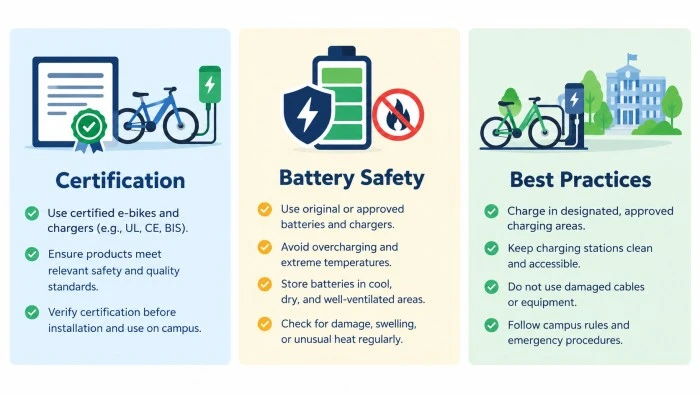
One of the most important considerations is certification. Campuses should establish requirements for e-bikes, batteries, chargers, and related electrical equipment based on applicable local safety standards and regulations. Products that have been evaluated by recognized testing or certification organizations can provide greater assurance that electrical and battery components have undergone appropriate safety assessments. Policies should also discourage modifications to battery systems, chargers, or electrical connections. Homemade battery packs, altered charging equipment, and incompatible components can introduce additional risks.
Use Approved Charging Locations
Campuses can reduce hazards by designating specific areas for e-bike charging. These locations should be selected carefully based on building design, electrical capacity, ventilation, fire protection, and accessibility. Charging stations should not block emergency exits, hallways, stairwells, or other evacuation routes. They should also be positioned away from combustible materials where practical.
Residential campuses may consider dedicated charging rooms or secure outdoor charging facilities. Clearly marked locations can make compliance easier because users know exactly where charging is permitted.
Inspect Batteries Before Charging
Users should inspect their batteries and chargers before connecting them to a power source. Signs of damage can include swelling, cracks, unusual odors, exposed wiring, leaking material, or excessive heat. A damaged battery should not be charged or used. Campus policies should provide clear instructions for reporting questionable equipment and explain where it can be safely isolated or evaluated. Staff responsible for charging facilities can also conduct periodic inspections of shared equipment and charging areas.
Use the Correct Charger
A charger should be compatible with the specific battery and e-bike system. Using an incorrect charger can cause electrical problems and may increase the risk of battery damage. Users should follow the manufacturer’s charging instructions and avoid substituting chargers simply because the connector appears to fit. Campus policies can require residents to use the charger supplied or approved for their particular battery system. This simple requirement can help prevent compatibility-related problems.
Avoid Unattended Charging
Whenever possible, charging should take place in a supervised or appropriately controlled environment rather than being left unattended for long periods. Users should avoid charging batteries while sleeping or when they are away from the building. Once charging is complete, disconnecting the charger according to the manufacturer’s instructions can help maintain good charging practices. Automatic charging controls can provide additional convenience, but they should not replace appropriate battery inspection and safe-use procedures.
Keep Batteries Away From Heat
Extreme temperatures can affect battery performance and safety. Charging locations should be protected from excessive heat and other unsuitable environmental conditions. Batteries should not be placed near heaters, open flames, direct sources of intense heat, or other potentially hazardous locations. Campus storage policies should specify appropriate areas for batteries when they are not being charged.
Educate Students and Staff
A charging policy works best when users understand why the rules exist. Campuses can provide short safety guides during student orientation, residence-hall check-in, or bike-registration programs. Information should explain how to identify battery damage, use approved chargers, report problems, and respond if a battery becomes unusually hot or shows other warning signs.
Actbestbike provides e-bike models for different riding needs, and users should always follow the manufacturer’s instructions for charging, battery care, and storage. Actbestbike riders using campus facilities should also follow the specific requirements established by their institution.
Establish Emergency Procedures
Every campus charging policy should explain what to do if a battery overheats, smokes, catches fire, or behaves unusually. Users should know when to stop interacting with the equipment, move away from the area, alert campus security or emergency services, and follow building evacuation procedures.
People should not attempt to handle a severely damaged or actively burning battery unless they are specifically trained and equipped to do so. Emergency information should be clearly displayed near designated charging areas.
Maintain Electrical Infrastructure
Campus facilities teams should regularly assess charging infrastructure to ensure that electrical systems can safely support the intended number of charging devices. Avoiding overloaded outlets and unauthorized extension arrangements is important. Where dedicated charging stations are installed, they should be professionally designed and maintained. Regular inspections can also identify damaged outlets, cables, charging equipment, or other hazards before they become more serious problems.
Create a Practical Campus Policy
An effective e-bike charging policy should balance convenience with safety. It should define approved equipment, charging locations, inspection requirements, user responsibilities, maintenance procedures, and emergency responses.
Rather than simply banning charging, campuses can provide safe, designated alternatives that encourage responsible use. Clear communication and consistent enforcement can help create a safer environment while supporting students and staff who rely on electric bikes for transportation.