How to Choose the Right Night Driving Glasses for Your Prescription and Driving Needs


Driving at night can be challenging, especially when bright headlights, streetlights, reflections, and low-light conditions make it harder to see clearly. The right pair of night driving glasses can help make your vision more comfortable, but choosing the right lenses and prescription is important.
Start With Your Current Prescription
If you already wear prescription glasses, your night-driving glasses should be made according to your current prescription. An accurate prescription helps ensure that distant objects, road signs, lane markings, and other vehicles remain as clear as possible.
If your prescription has changed recently, consider getting an updated eye examination before ordering a new pair. Using an outdated prescription may make nighttime driving more difficult rather than improving it.
Consider Anti-Reflective Coatings
Headlights and other bright light sources can create distracting reflections on lenses. An anti-reflective coating can reduce reflections from the front and back surfaces of your lenses, allowing more light to reach your eyes.
This feature can be particularly useful for drivers who frequently travel after dark or encounter heavy traffic with bright headlights.
Look for Lenses Designed for Nighttime Conditions
Night driving requires different considerations than daytime driving. Lenses designed for low-light conditions may focus on reducing distracting glare while maintaining natural visibility.
Some specialized lenses use contrast-enhancing technology to make objects and details easier to distinguish in challenging lighting. When comparing options, look for lens technology that is specifically intended for nighttime or low-light use.
Be Careful With Tinted Lenses
Yellow or amber-tinted lenses are sometimes marketed for night driving because they can alter contrast and reduce the perceived intensity of certain lights. However, darker tints can also reduce the amount of light reaching your eyes.
For nighttime driving, prioritize lenses that maintain sufficient light transmission and do not unnecessarily darken your view. Your vision should remain clear enough to recognize road hazards, pedestrians, signs, and lane markings.
Choose Frames That Fit Securely
Lens performance is only part of the equation. A comfortable, secure frame is also important when you’re driving.
Choose a frame that:
Fits comfortably without slipping
Does not obstruct your peripheral vision
Sits securely on your nose and ears
Is comfortable during extended drives
Works well with your existing prescription
A properly fitted frame can also help keep your lenses positioned correctly in front of your eyes.
Consider Your Driving Habits
Think about when and where you normally drive. Someone who mostly drives on well-lit city roads may have different needs from someone who regularly travels on dark highways or rural roads.
Consider factors such as how often you drive at night, whether you frequently encounter oncoming headlights, and whether you need prescription correction for nearsightedness, farsightedness, astigmatism, or other vision needs.
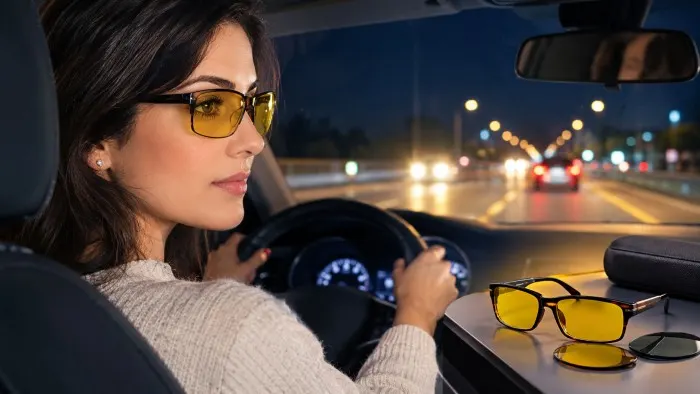
Compare Lens Options Carefully
When shopping for night driving glasses, compare more than just the appearance of the frames. Check the prescription options, lens materials, coatings, light transmission, and any specialized lens technology.
For example, Zenni Optical offers night-driving glasses and lenses designed with features intended to address glare and contrast in low-light conditions. Comparing these specifications can help you determine whether a particular option matches your prescription and driving routine.
Have Your Eyes Checked Regularly
Glasses cannot correct every cause of nighttime vision problems. Difficulty seeing at night, persistent glare, halos around headlights, or sudden changes in vision can sometimes indicate an underlying vision issue.
Regular eye examinations can help identify changes in your prescription and determine whether additional vision correction is needed.
Make Safety the Priority
Night driving glasses should complement, not replace, good driving habits. Keep your windshield and mirrors clean, make sure your headlights are functioning properly, and reduce your speed when visibility is poor.
Most importantly, choose glasses that provide clear, comfortable vision without unnecessarily reducing the amount of light reaching your eyes.
Final Thoughts
Choosing the right night driving glasses involves more than picking a stylish frame. Start with an accurate prescription, consider anti-reflective and contrast-enhancing features, avoid unnecessarily dark lenses, and select a comfortable frame that suits your driving habits. With the right combination of prescription and lens features, you can make nighttime driving more comfortable while maintaining the clear vision needed to navigate the road safely.