Do Moped-Style eBikes Require a License? Understanding Registration and Class Rules

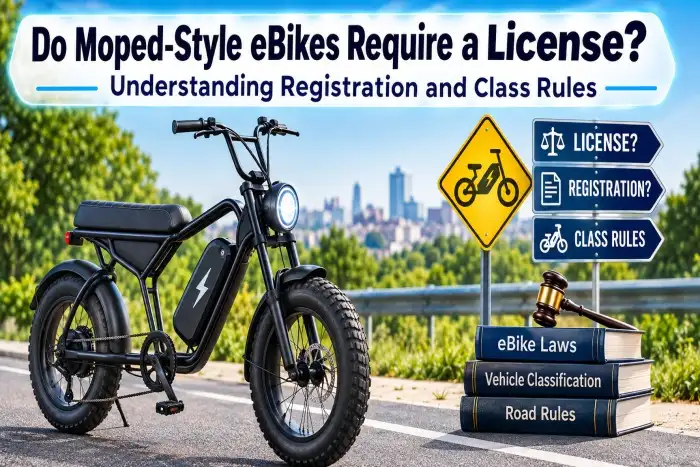
Moped-style eBikes have become a popular choice for riders who want the appearance and comfort of a small motorcycle while enjoying the convenience of electric power. Their larger frames, long bench seats, fat tires, and higher-capacity batteries make them ideal for commuting, recreational riding, and weekend adventures. However, because they closely resemble traditional mopeds, many riders wonder whether they need a driver’s license, vehicle registration, or insurance before taking one on the road.
The answer isn’t always straightforward. Laws vary by country, state, and even city. In most places, what determines the legal requirements isn’t how the bike looks but how it’s classified. Understanding eBike classes and local regulations is essential before making a purchase or heading out for a ride.
What Is a Moped-Style eBike?
A moped-style eBike is an electric bicycle designed with features commonly associated with mopeds or motorcycles. Unlike traditional bicycles, these models often include:
- A longer bench-style seat
- Thick, all-terrain tires
- Integrated headlights and taillights
- Powerful electric motors
- Large battery capacity for extended range
- Motorcycle-inspired styling
Despite their appearance, many moped-style eBikes still qualify as electric bicycles under local laws if they meet specific speed and motor power limits.
Do You Need a License?
In many regions, no driver’s license is required if the eBike meets the legal definition of an electric bicycle.
Generally, you do not need a license when the bike:
- Falls within approved eBike classifications
- Has a motor power within legal limits
- Does not exceed the maximum assisted speed established by local regulations
- Includes functional pedals
However, if the vehicle exceeds these limits, it may legally be classified as a moped or motorcycle. In that case, you may need:
- A valid driver’s license
- Vehicle registration
- License plates
- Insurance
- Helmet compliance under motorcycle laws
Always check your local transportation authority before riding.
Understanding eBike Classifications
Many jurisdictions categorize electric bicycles into three primary classes.
Class 1
Class 1 eBikes provide pedal assistance only.
Features include:
- Motor assists only while pedaling
- Maximum assisted speed of approximately 20 mph (32 km/h)
- No throttle
These bikes generally have the fewest restrictions and are allowed on most bike paths and trails.
Class 2
Class 2 eBikes include a throttle.
Typical characteristics:
- Throttle-assisted riding
- Maximum assisted speed around 20 mph
- Pedal assist available
Many moped-style eBikes fall into this category while remaining legal as bicycles.
Class 3
Class 3 models offer higher assisted speeds.
They usually feature:
- Pedal assist up to 28 mph (45 km/h)
- Often no throttle, depending on regulations
- Additional equipment requirements in some areas
Some regions restrict Class 3 eBikes from certain bike paths or recreational trails.
When Registration Becomes Necessary
Registration requirements depend on how your vehicle is legally classified.
Registration may become necessary if:
- The motor exceeds the legal power limit
- Top speed surpasses eBike regulations
- The bike lacks operable pedals
- Local authorities classify it as a moped
If your vehicle remains within the legal eBike specifications, registration is often unnecessary.
What About Insurance?
Insurance is generally optional for standard electric bicycles.
However, riders may choose optional coverage for:
- Theft protection
- Accident damage
- Liability
- Battery replacement
- Personal injury
If the vehicle qualifies as a moped or motorcycle, insurance may become mandatory.
Helmet Requirements
Helmet laws differ by location.
Some areas require helmets only for:
- Riders under a certain age
- Class 3 eBike users
Others recommend helmets for everyone regardless of age or bike class.
Even when not legally required, wearing a certified helmet significantly improves rider safety.
Where Can You Ride a Moped-Style eBike?
Access varies depending on classification.
You may commonly ride on:
- Public roads
- Bike lanes
- Multi-use paths
- Urban streets
Some parks, nature trails, and pedestrian areas restrict higher-speed or throttle-operated eBikes.
Always observe posted regulations before entering shared-use trails.
Motor Power Matters
One of the biggest legal factors is motor wattage.
Many countries establish maximum motor power limits for electric bicycles. Exceeding those limits can automatically move the vehicle into the moped or motorcycle category.
Higher-powered motors often provide:
- Faster acceleration
- Better hill climbing
- Increased cargo capability
However, they may also trigger additional legal requirements.
Speed Determines Classification
Maximum assisted speed is another important consideration.
For example:
- Up to 20 mph often qualifies as Class 1 or Class 2.
- Up to 28 mph may qualify as Class 3.
- Speeds beyond these limits may require licensing and registration.
Modifying an eBike to exceed factory speed limits can also affect its legal status.
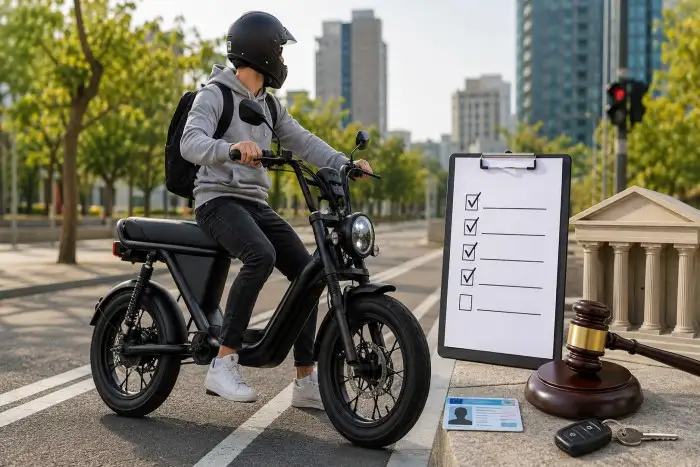
Traveling Between States or Countries
Laws can change when crossing borders.
A moped-style eBike that is perfectly legal in one state or country may require registration or a license elsewhere.
Before traveling:
- Review local traffic laws
- Confirm speed regulations
- Check helmet requirements
- Understand trail access rules
Planning ahead helps avoid fines or riding restrictions.
Choosing a Legal Moped-Style eBike
When shopping for an electric bike, consider:
- Motor power
- Top assisted speed
- Pedal functionality
- Battery range
- Local eBike classification
- Safety certifications
- Lighting and braking systems
Selecting a model that complies with local regulations allows you to enjoy the benefits of electric riding without unnecessary legal complications.
Ride Responsibly
Regardless of legal classification, responsible riding is essential.
Practice safe habits by:
- Following traffic rules
- Yielding to pedestrians
- Using lights after dark
- Wearing visible clothing
- Maintaining your brakes and tires
- Respecting shared pathways
Safe riding benefits everyone on the road.
Final Thoughts
Whether a moped-style eBike requires a license depends far more on its legal classification than its appearance. If it meets your area’s electric bicycle regulations for motor power, speed, and pedal functionality, you can usually ride without registration or a driver’s license. However, higher-powered models that exceed those limits may fall under moped or motorcycle regulations.
Before purchasing, review your local laws and compare specifications carefully. Resources from ACTBEST Bike can also help riders understand how different models fit within current eBike regulations while choosing the right option for everyday commuting or recreational use.