Top Crypto Trends to Watch in 2026: AI, DeFi, Tokenization, and More

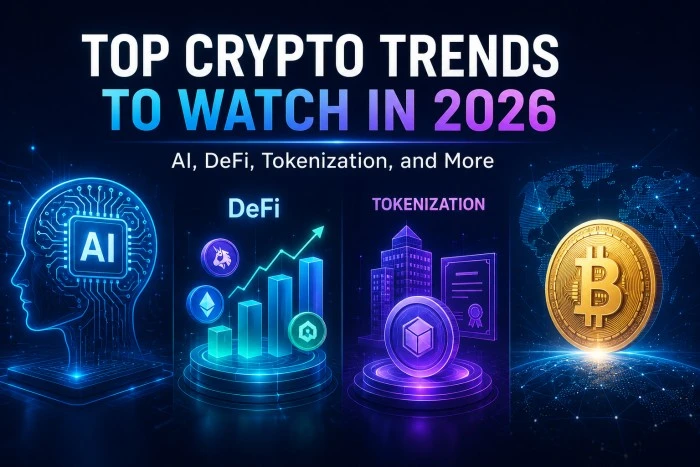
The cryptocurrency market continues to evolve beyond simple digital payments, and 2026 is shaping up to be another important year for innovation. Crypto Trends are increasingly being influenced by artificial intelligence, decentralized finance, tokenized real-world assets, stablecoins, and improvements in blockchain infrastructure.
For investors and technology enthusiasts, understanding these developments can provide useful context when evaluating where the industry may be heading. Rather than focusing on individual coins, it is often more useful to understand the broader technologies and applications driving adoption. Several major themes deserve attention throughout the year.
AI and Blockchain Move Closer Together
Artificial intelligence and blockchain are two of the most closely watched technologies, and their combination could create new applications across multiple industries. Blockchain can provide transparent records for transactions and digital ownership, while AI can process information, automate tasks, and make data-driven decisions. Their intersection could support decentralized AI networks, automated blockchain applications, AI-powered trading tools, and systems designed to verify the origin of digital information.
However, combining the technologies also introduces challenges. Data quality, computational requirements, privacy, security, and regulatory questions will influence how quickly AI-blockchain applications develop.
DeFi Continues to Mature
Decentralized finance, commonly known as DeFi, remains a major area of blockchain development. DeFi platforms attempt to provide financial services such as lending, borrowing, trading, and asset management without relying entirely on traditional intermediaries.
In 2026, attention may increasingly shift from experimentation toward usability, security, and sustainable applications. Better interfaces and improved infrastructure could make decentralized financial products easier for mainstream users to understand. Security remains one of the biggest considerations. Smart-contract vulnerabilities, fraudulent projects, and market volatility can create substantial risks, making careful research essential.
Tokenization of Real-World Assets
Tokenization involves representing ownership or economic rights to real-world assets using blockchain-based tokens. Potential examples include real estate, bonds, commodities, and other financial instruments. The appeal comes from the possibility of making traditionally difficult-to-trade assets more accessible and programmable.
Blockchain-based records could potentially streamline settlement, ownership transfers, and certain administrative processes. The growth of tokenization will depend not only on blockchain technology but also on legal frameworks, custody systems, investor protections, and cooperation from financial institutions.
Stablecoins Gain Greater Importance
Stablecoins are cryptocurrencies designed to maintain a relatively stable value, often by referencing assets such as the U.S. dollar. They have become an important part of the digital asset ecosystem because they can facilitate trading, transfers, and decentralized applications. In 2026, stablecoins could receive greater attention as governments and financial institutions examine their potential role in payments and digital finance. Regulation will be particularly important. Questions around reserves, transparency, consumer protection, and issuer responsibilities could shape which stablecoin models gain wider acceptance.
Blockchain Scalability and Layer-2 Networks
As blockchain usage increases, scalability remains a major technical challenge. Networks need to process more transactions efficiently without sacrificing security or decentralization. Layer-2 solutions are designed to process transactions away from a primary blockchain while using the underlying network for security or settlement. Continued development in this area could improve transaction speeds and reduce costs. For users, these improvements may make blockchain applications more practical for everyday transactions, gaming, financial services, and other use cases.
Institutional Adoption Keeps Expanding
Cryptocurrency is increasingly being considered by established financial institutions, asset managers, and businesses. Greater institutional involvement can potentially bring additional liquidity, infrastructure, research, and legitimacy to the digital asset market.
At the same time, institutional participation doesn’t eliminate risk. Crypto assets can remain highly volatile, and regulatory changes can influence investment products and market access. Investors should therefore distinguish between growing institutional interest and guaranteed investment performance.
Decentralized Physical Infrastructure
Another developing area is decentralized physical infrastructure, sometimes referred to as DePIN. These projects use blockchain-based incentives to coordinate physical resources such as wireless networks, computing capacity, storage, or mapping infrastructure.
The concept attempts to connect digital tokens with real-world services. If successful, these networks could create alternative models for building and maintaining infrastructure. The major question is whether token incentives can support economically sustainable services over the long term rather than relying primarily on speculative demand.
Improved Blockchain Interoperability
The crypto ecosystem includes numerous blockchain networks with different technical architectures. Moving information and assets between these networks has historically presented technical and security challenges.
Interoperability solutions aim to make different blockchains communicate more effectively. Better interoperability could reduce fragmentation and allow users to access applications across multiple networks more seamlessly. Security will remain critical, since cross-chain systems have historically been attractive targets for attackers.
Regulation Becomes a Defining Factor
Technology isn’t the only trend shaping crypto. Regulation may be equally important. Governments worldwide continue developing approaches to digital assets, stablecoins, exchanges, taxation, custody, and consumer protection.
Clearer rules could encourage responsible innovation and institutional participation, while restrictive or uncertain regulations could slow adoption in particular markets. Investors should monitor regulatory developments alongside technological progress rather than evaluating cryptocurrencies solely on market sentiment.
What Investors Should Watch
Resources such as The Motley Fool can provide broader investment education and market analysis, but crypto investing requires particular attention to volatility and risk. The Motley Fool and other financial resources should be used as starting points for research rather than substitutes for independent due diligence.
When evaluating crypto trends, consider factors such as:
- Real-world usefulness
- Developer and user adoption
- Security history
- Regulatory environment
- Token economics
- Competitive landscape
- Long-term sustainability
A project associated with a popular trend isn’t automatically a strong investment.
Looking Ahead in 2026
The cryptocurrency industry is becoming increasingly connected to broader developments in finance and technology. AI integration, DeFi, asset tokenization, stablecoins, scalability solutions, institutional adoption, decentralized infrastructure, and interoperability are among the themes that could shape the sector throughout 2026.
The most important trend may ultimately be the shift from speculation toward practical applications. Projects that solve genuine problems, build secure infrastructure, and attract sustainable users could have greater staying power than those driven primarily by short-term hype. For anyone following crypto this year, separating technological progress from market excitement will remain essential.