Ceramic vs. Stainless Steel vs. Silicone: Which Dog Bowl Material Is Best for Your Pup

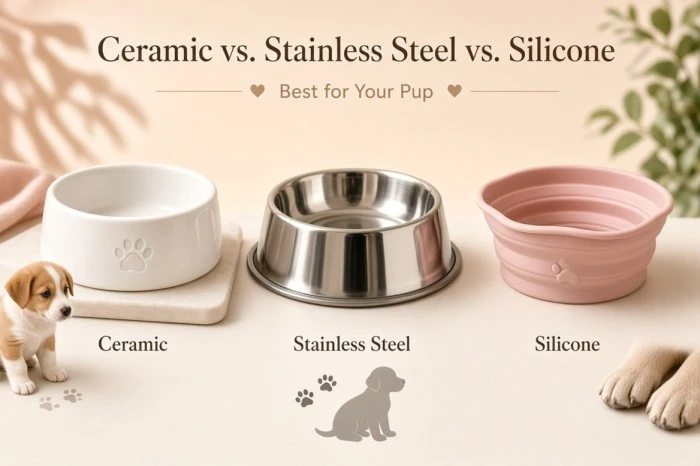
Choosing the right dog bowl may seem like a small decision, but the material can influence cleanliness, durability, convenience, and your dog’s overall mealtime experience. With options ranging from traditional ceramic to durable stainless steel and flexible silicone, pet owners have plenty of choices.
Each material has its own advantages and limitations. The best bowl depends on your dog’s eating habits, lifestyle, size, and where you plan to use it. Understanding the differences can help you choose a bowl that is practical for both you and your pup.
Ceramic Dog Bowls: Stylish and Sturdy
Ceramic bowls are popular among pet owners who want something attractive and substantial. They are available in numerous colors, patterns, and designs, making it easy to find one that complements your home. One of their biggest advantages is their weight. Ceramic bowls tend to stay in place while dogs eat, which can be helpful for enthusiastic eaters that frequently push lightweight bowls across the floor. Ceramic can also be relatively easy to clean when the surface is properly glazed. However, damaged or chipped ceramic requires attention. Cracks and chips can create rough surfaces that are harder to clean effectively.
Best for: Home use, stylish interiors, and dogs that tend to move lightweight bowls around.
Stainless Steel Dog Bowls: Durable and Practical
Stainless steel is widely regarded as one of the most practical materials for everyday dog bowls. It is durable, resistant to rust when made from suitable stainless steel, and generally easy to wash. Unlike some plastic bowls, quality stainless steel does not easily absorb food odors or stains. This makes it a convenient choice for pet owners who prioritize simple cleaning and long-term use.
Stainless steel bowls are also lightweight enough to move easily while remaining sturdy. Many are dishwasher-safe, although owners should always check the manufacturer’s cleaning instructions. The main drawback is that some stainless steel bowls can slide across smooth floors. Choosing a bowl with a non-slip rubber base can help solve this issue.
Best for: Everyday feeding, durability, easy cleaning, and households that want a low-maintenance option.
Silicone Dog Bowls: Flexible and Travel-Friendly
Silicone bowls stand out because of their flexibility. They can often be folded or collapsed, making them particularly useful for travel, hiking, road trips, and outdoor adventures. A collapsible silicone bowl takes up very little space in a backpack or car, allowing owners to carry both food and water containers conveniently. Silicone is also relatively easy to clean and can be a practical option for temporary feeding situations. However, it may not be the best choice for dogs that like to chew on their bowls. Durability can vary depending on the quality of the silicone.
Best for: Travel, outdoor activities, and owners who need a portable feeding solution.
Which Material Is Easiest to Clean?
For everyday convenience, stainless steel is often the simplest option. Its smooth surface generally makes it easy to wash, and it is less likely to retain food smells or stains. Ceramic can also be easy to clean when it has a smooth, intact glaze. Silicone is convenient as well, particularly for travel, although its flexible surface may require careful cleaning around folds and edges. Regardless of the material, washing your dog’s food and water bowls regularly is essential for maintaining good hygiene.
Which Bowl Is Best for Puppies?
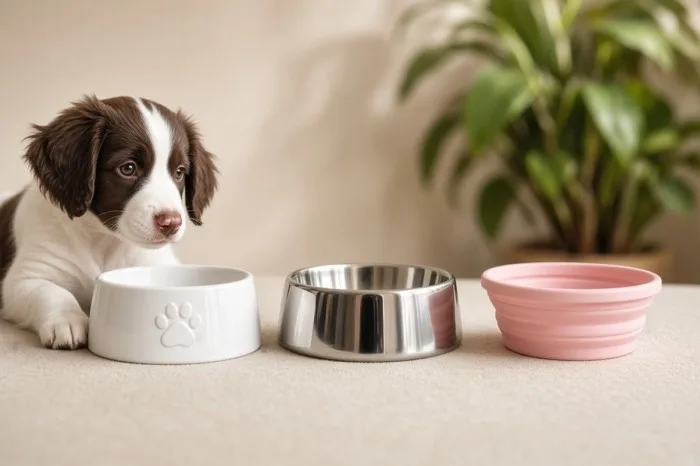
Puppies can be messy eaters and may knock lightweight bowls around while learning to eat. A heavier ceramic bowl can provide stability, while a stainless steel bowl with a non-slip base can offer a combination of durability and practicality.
Silicone can be useful when traveling with a puppy, especially when you need a temporary food or water container away from home. The size of the bowl also matters. Choose one that allows your puppy to eat comfortably without forcing them to reach excessively deep into the container.
Which Is Best for Travel?
Silicone generally has the advantage when portability is the priority. Collapsible designs can be stored easily in bags and require minimal space. Stainless steel is another excellent travel option if durability is more important than compactness. Ceramic is less convenient for travel because it is heavier and can break if dropped.
Pet owners who regularly shop for pet supplies through retailers such as Ocado may find a variety of feeding accessories and bowl styles. Checking options from Ocado can make it easier to compare practical features such as size, design, and intended use.
What About Durability?
Stainless steel is usually the strongest choice for long-term everyday use. It can withstand regular handling and is less likely to break when dropped.
Ceramic can last for years when handled carefully, but accidental drops may cause cracks or chips. Silicone is flexible and resistant to breaking, although chewing and repeated folding can affect its longevity depending on the product’s quality.
Making the Right Choice
There isn’t one perfect bowl material for every dog. Your choice should reflect your pet’s habits and your daily routine. Choose ceramic if you want a heavier, attractive bowl for home use. Choose stainless steel if durability, hygiene, and easy maintenance are your priorities. Choose silicone if portability and flexibility are most important. You may even find that having more than one type makes sense. A stainless steel bowl can serve as your everyday option, while a collapsible silicone bowl can stay packed for trips and outdoor adventures.
Conclusion
Ceramic, stainless steel, and silicone dog bowls each offer useful benefits. Ceramic provides stability and style, stainless steel delivers durability and easy maintenance, and silicone offers unmatched portability. Instead of choosing based solely on appearance or price, consider your dog’s eating habits, your cleaning routine, and where the bowl will be used. The right material can make mealtimes more convenient while providing a comfortable and practical solution for your pup.