Best Men’s Gym Shorts and Joggers for Every Workout: Leg Day, Running, HIIT, and Warm-Ups

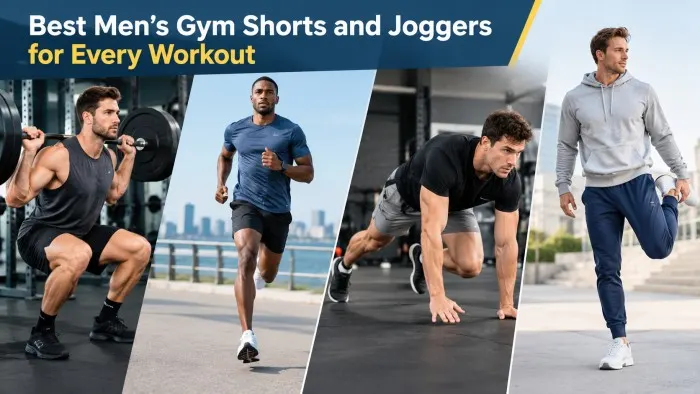
Choosing the right men’s gym shorts and joggers can improve comfort, mobility, and performance across different training styles. The demands of heavy squats differ from those of interval sprints or steady warm-ups, so fabric, fit, and features should match the activity. This guide breaks down what to look for in each type of workout so you can build a practical training wardrobe.
Leg Day: Mobility and Support for Heavy Lifts
Leg day places high demands on the hips, glutes, and thighs. Shorts need enough stretch to allow deep squats, lunges, and hip hinges without restriction. Look for four-way stretch fabrics that move with the body and a gusseted crotch for unrestricted range of motion. A slightly longer inseam (7–9 inches) offers more coverage during wide-stance movements while still allowing airflow.
Compression or fitted styles can provide light muscle support and reduce distraction from excess fabric. Drawstring waists with a secure elastic band help keep the shorts in place under a loaded barbell or during kettlebell work. Avoid overly baggy cuts that can catch on equipment or shift during heavy sets. Moisture-wicking material is still useful, as intense lower-body sessions generate significant heat.
Running: Lightweight Breathability and Chafe Prevention
Running shorts prioritise low weight, ventilation, and freedom of stride. Lightweight polyester or nylon blends with high breathability keep legs cooler on longer efforts. Built-in liners can reduce chafing, though some runners prefer going without and using separate compression shorts underneath.
An inseam of 5–7 inches is common for road and track running, balancing coverage with unrestricted leg swing. Reflective details improve visibility for early-morning or evening runs. Secure pockets for a key, card, or phone are practical, preferably zippered or with a close-fitting design that does not bounce. Flatlock seams further minimise irritation over distance. For colder conditions, lightweight running joggers or tights layered under shorts offer adaptable coverage.
HIIT: Durability and Freedom for Explosive Movement
High-intensity interval training involves rapid changes of direction, jumps, burpees, and strength-cardio combinations. Shorts for HIIT should combine stretch, durability, and a secure fit. Four-way stretch fabrics handle the varied movement patterns, while reinforced seams withstand repeated high-stress motions.
A mid-length inseam (6–8 inches) usually works well, providing coverage during floor work and inverted positions without excess material. Sweat-wicking and quick-drying properties matter because HIIT sessions often produce continuous sweating. Some athletes prefer shorts with a slightly compressive feel for muscle awareness during explosive efforts. Avoid heavy materials or restrictive waistbands that can become uncomfortable during repeated high-output intervals.
Warm-Ups: Coverage, Comfort, and Easy Layering
Warm-up joggers and longer shorts serve a different purpose: raising body temperature, protecting muscles, and allowing easy transition into the main session. Soft, brushed-back fleece or mid-weight stretch fabrics provide light insulation without overheating. Tapered legs prevent fabric from catching underfoot during dynamic stretches or light cardio.
Elastic or drawstring waists with a comfortable rise keep joggers in place during mobility work. Zippered pockets are useful for storing small items before the workout begins. Many athletes choose joggers that can be removed quickly once the body is warm, so a smooth, non-restrictive fit is ideal. Lightweight options also work for cool-down periods or outdoor training in mild conditions.
Key Features Across All Categories
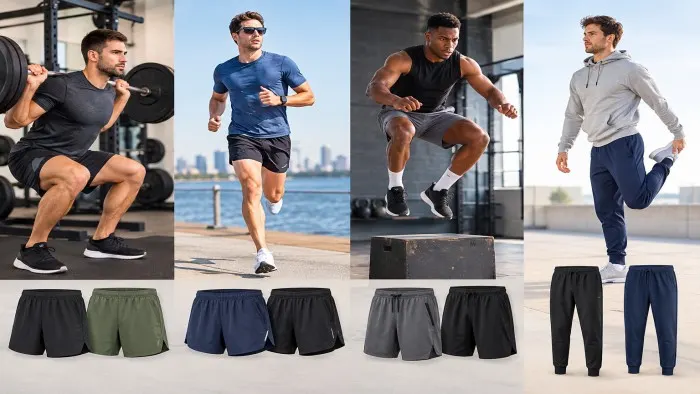
Regardless of workout type, several features improve the overall experience. Moisture-wicking and quick-drying fabrics help regulate temperature and reduce post-workout dampness. Flatlock or carefully placed seams minimise chafing. A reliable waistband—whether elastic, drawstring, or a combination—keeps garments secure during movement.
Fit should allow full range of motion without excess bulk. Trying shorts and joggers through a few bodyweight squats or high knees in the fitting room (or at home) quickly reveals restrictions. Durability matters for frequent training; reinforced stitching and quality fabric blends last longer under repeated wash-and-wear cycles.
Affordable, functional options from brands such as H&M make it easier to maintain a rotation of shorts and joggers suited to different sessions without overspending. Checking fabric composition and customer feedback on stretch and durability helps narrow choices.
Building a Practical Rotation
Most men benefit from owning at least two pairs of versatile shorts and one or two pairs of joggers. A lightweight pair for running and HIIT, a more durable or compressive pair for strength work, and comfortable joggers for warm-ups and cooler conditions cover the majority of needs. Rotating garments also extends their lifespan by reducing continuous wear.
Proper care—washing in cool water, avoiding high-heat drying, and following fabric instructions—keeps elastic and wicking properties intact longer. Selecting men’s gym shorts and joggers according to the specific demands of leg day, running, HIIT, and warm-ups improves both comfort and performance. Matching fabric, fit, and features to the movement patterns of each session allows you to train with fewer distractions and greater focus on the work itself.