Vegetarian, Vegan, and Gluten-Free Cooking Ingredients: A Shopper’s Guide to Reading Labels

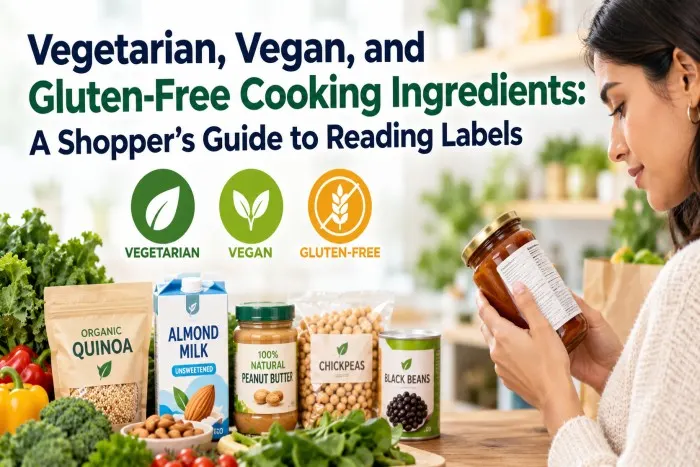
Choosing the right cooking ingredients starts with understanding labels. Whether you follow a vegetarian, vegan, or gluten-free diet—or cook for someone who does—the information printed on packaging determines what is safe and suitable. Learning to read ingredient lists, allergen statements, and certification logos helps you avoid hidden animal products, dairy derivatives, and gluten sources while shopping with confidence.
Understanding Vegetarian Labels
Vegetarian products exclude meat, poultry, and fish but may still contain eggs, dairy, or honey. Look for clear “suitable for vegetarians” statements or recognised vegetarian society logos. Ingredient lists should be free of meat extracts, gelatine, animal rennet, and fish-derived flavourings such as anchovy.
Be cautious with cheese: some varieties use animal rennet, while others use microbial or vegetable alternatives. The label should specify the type of rennet if the product is marketed as vegetarian. Stock cubes, sauces, and ready-made stocks often contain meat or fish derivatives even when the flavour seems plant-based. Always scan the full ingredient list rather than relying on front-of-pack claims alone.
Identifying Truly Vegan Products
Vegan ingredients contain no animal-derived substances at all. This means no meat, fish, dairy, eggs, honey, beeswax, shellac, or certain food colourings such as carmine (E120). Certified vegan logos from recognised organisations provide the strongest assurance, but many products simply state “suitable for vegans” or “plant-based.”
Common hidden animal ingredients include casein, whey, lactose, albumin, and gelatine. Some vitamins (particularly D3) may be derived from lanolin, and certain sugar refining processes historically used bone char, though this is less common in many markets today. Emulsifiers, flavourings, and “natural flavours” can also be animal-sourced; when in doubt, contact the manufacturer or choose products with transparent, fully plant-based declarations.
Navigating Gluten-Free Claims
Gluten-free labelling is more strictly regulated in many regions. Products labelled “gluten-free” must contain no more than a very low threshold of gluten (typically 20 parts per million). Certified gluten-free logos offer additional reassurance.
Wheat, barley, rye, and their derivatives are obvious sources, but gluten can also appear in less expected places: malt flavouring, soy sauce, some baking powders, processed meats, and certain thickeners. Oats are naturally gluten-free yet frequently contaminated during processing unless specifically labelled as gluten-free oats. Cross-contamination warnings such as “may contain wheat” or “produced in a facility that also handles gluten” are important for people with coeliac disease or high sensitivity.
Cross-Checking Multiple Dietary Needs
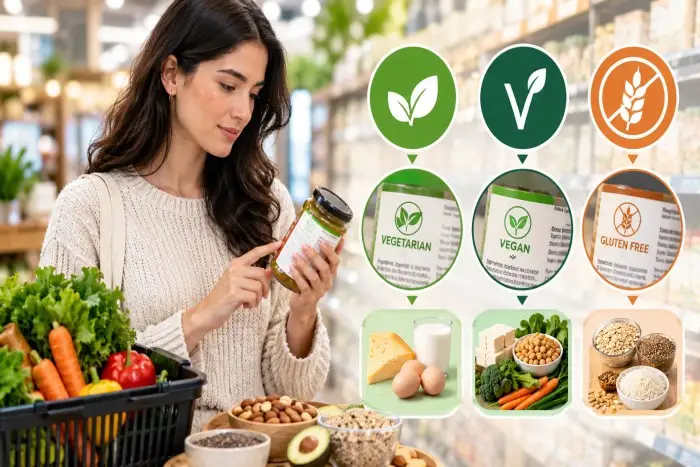
Many shoppers need ingredients that meet more than one requirement—for example, vegan and gluten-free, or vegetarian and free from specific allergens. In these cases, examine both the dietary suitability statement and the full allergen and ingredient declarations. A product marked “vegan” is not automatically gluten-free, and a gluten-free item may still contain dairy or eggs.
Packaging that lists multiple certifications (vegan, vegetarian, and gluten-free) simplifies decision-making. When certifications are absent, a careful reading of the ingredient list and allergen box remains essential.
Practical Shopping Strategies
Shop with a short mental checklist: suitability logo or statement, full ingredient list, allergen information, and any “may contain” warnings. Familiarise yourself with alternative names for common problem ingredients so they are easier to spot. Over time, trusted brands become easier to recognise, reducing the need to scrutinise every label.
Online and supermarket ranges increasingly highlight dietary filters. Platforms such as ocado allow shoppers to filter by vegetarian, vegan, and gluten-free categories, which can speed up the process when building a weekly shop. Even with filters, it is still wise to double-check the detailed product information, especially for new or reformulated items.
Common Pitfalls and How to Avoid Them
Front-of-pack claims can be incomplete. A “plant-based” label does not always guarantee the absence of every animal derivative, and “wheat-free” is not the same as gluten-free. Seasonings, spice blends, and prepared sauces frequently contain hidden gluten or dairy. When buying in bulk or from loose bins, ask about shared equipment and cross-contamination risks.
If a product seems ambiguous, choose a clearly certified alternative or contact the brand for clarification. Keeping a small list of reliable substitute ingredients—such as gluten-free flours, plant-based milks, and egg replacers—makes it easier to adapt recipes without last-minute compromises.
Building Confidence Over Time
Reading labels becomes faster with practice. Start by focusing on the products you buy most often, then expand to new categories. Note which brands consistently meet your standards and which ones require extra scrutiny. Share reliable finds with family or friends who follow similar diets so the knowledge multiplies.
Accurate label reading protects dietary integrity and reduces the risk of accidental exposure to unwanted ingredients. By combining certification logos, thorough ingredient checks, and allergen statements, shoppers can select vegetarian, vegan, and gluten-free cooking ingredients with greater certainty and less stress.