After-Hours Trading Explained: How Investors React to Market News in Real Time

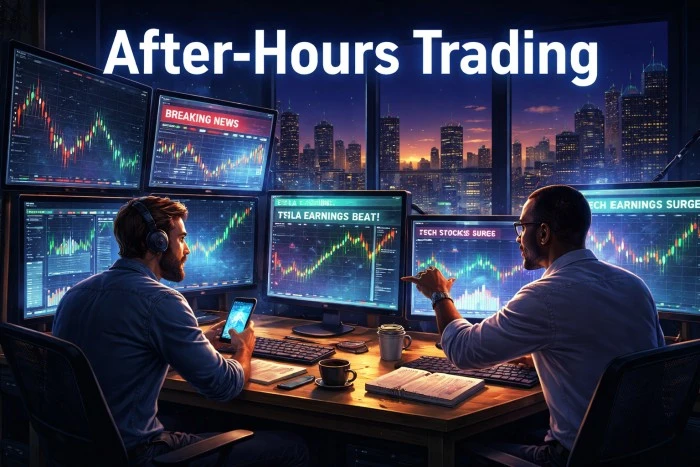
After-hours trading (AHT) allows investors to buy and sell stocks outside the standard 9:30 a.m. to 4:00 p.m. ET regular market session. In the United States, the after-hours window typically runs from 4:00 p.m. to 8:00 p.m. ET, though exact times can vary slightly by broker.
This extended session has become increasingly important in 2026 as companies continue to release major news — especially earnings reports — after the closing bell. According to The Motley Fool, after-hours trading gives investors the chance to react immediately to breaking information rather than waiting until the next morning’s open, when prices may have already adjusted significantly.
How After-Hours Trading Actually Works
The Mechanics Behind the Scenes
After-hours trading occurs through electronic communication networks (ECNs) rather than traditional stock exchanges like the NYSE or Nasdaq. These platforms match buyers and sellers directly.
Key differences from regular hours:
- Lower liquidity — Fewer participants mean thinner order books.
- Wider spreads — The gap between bid and ask prices is often larger.
- Limit orders only — Market orders are typically not allowed to protect against extreme volatility.
- No guaranteed execution — Your order may not fill if there aren’t enough matching buyers or sellers.
Most major brokers, including those recommended by The Motley Fool, now offer after-hours access to retail investors.
When Does the Action Happen?
The highest volume and volatility usually occur in the first 30–60 minutes after the 4:00 p.m. close, especially on earnings days. Activity often slows significantly after 6:00 or 7:00 p.m. as fewer traders remain active.
How Investors React to Market News in Real Time
The Immediate Reaction Game
When a company releases earnings or major news after the bell, investors and algorithms react instantly. A strong earnings beat can send a stock soaring 5–15% or more in after-hours trading. Conversely, a miss or weak guidance can trigger sharp sell-offs.
This real-time reaction serves as an early indicator of how the stock might open the next day. Savvy investors watch after-hours price action closely because it often sets the tone for regular trading.
Real-World Examples of News-Driven Moves
- A tech giant beats earnings expectations and raises guidance → Shares jump 8–12% in the first 30 minutes of after-hours trading.
- A retailer warns of weaker holiday sales → The stock drops 10%+ as investors rush to adjust positions.
- Unexpected macroeconomic news (like interest rate decisions or geopolitical events) can also spark volatility after hours.
The Motley Fool frequently highlights how these rapid moves create both opportunities and risks for individual investors who act quickly.
Benefits of Participating in After-Hours Trading
- Faster reaction to news — You don’t have to wait until the next day to adjust your portfolio.
- Potential for early gains — Getting in (or out) before the broader market can lead to better pricing.
- Convenience — Many retail investors trade after work when they have more free time.
- Strategic positioning — Institutions and retail traders alike use after-hours to reposition ahead of the next session.
Important Risks Every Investor Should Know
Volatility and Liquidity Risks
With fewer participants, prices can swing dramatically on relatively small trades. A stock might move 5% on news that would only cause a 1–2% move during regular hours.
Wider Spreads and Execution Challenges
You may pay more (or receive less) than expected due to larger bid-ask spreads. Orders might not fill at all if liquidity is too thin.
Limited Information and Emotional Decisions
After-hours reactions are often based on initial headlines rather than full analysis. This can lead to overreactions that partially reverse when the market opens the next day.
The Motley Fool advises investors to approach after-hours trading with caution and to use limit orders to control prices.

Who Should (and Shouldn’t) Trade After Hours?
After-hours trading suits experienced investors who understand the risks and can monitor positions closely. Beginners and long-term buy-and-hold investors are generally better off waiting for regular hours when liquidity is highest and price discovery is more efficient.
Practical Tips for Safer After-Hours Trading
- Use limit orders only.
- Check volume and spreads before placing trades.
- Focus on stocks with high average daily volume.
- Avoid trading immediately after major news unless you have a clear strategy.
- Consider the bigger picture — after-hours moves don’t always predict the next day’s direction.
After-Hours Trading as a Double-Edged Sword
After-hours trading gives investors the power to react to market news in real time, but it comes with significantly higher risks due to lower liquidity and greater volatility. Understanding how it works — and when to participate — can help you make more informed decisions.
As The Motley Fool often reminds readers, successful investing is about patience and discipline. For most people, the smartest approach is to use after-hours price action as valuable information rather than an invitation to trade impulsively.
Whether you’re monitoring your portfolio or considering an after-hours move, always trade with a clear plan and full awareness of the unique dynamics at play once the closing bell rings.