How Far Can an Electric Bike Go on a Single Charge? Factors That Affect Battery Range

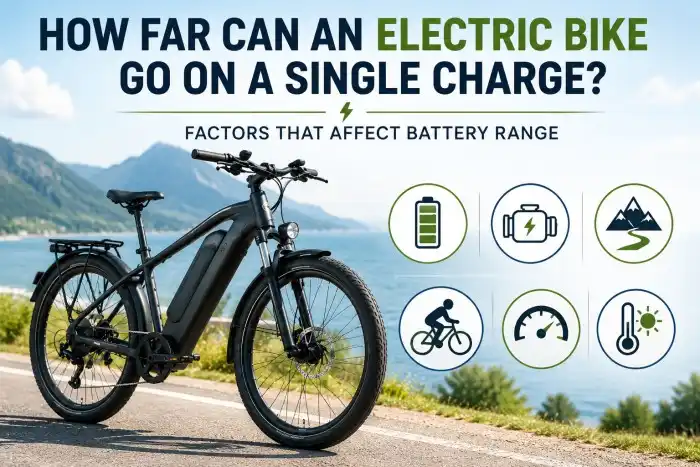
One of the first questions people ask before buying an electric bike is, “How far can it travel on a single charge?” The answer isn’t always straightforward. While some e-bikes can travel around 20 miles per charge, others are capable of covering 80 miles or even more under ideal conditions.
Battery range depends on far more than battery size alone. Terrain, rider weight, weather, riding style, and motor settings all play a significant role in determining how far your e-bike can go before it needs recharging.
Whether you’re commuting to work, exploring trails, or planning long-distance rides, understanding the factors that influence battery performance will help you get the most out of every charge.
What Is Electric Bike Range?
Electric bike range refers to the distance an e-bike can travel on a fully charged battery before it needs to be recharged.
Manufacturers usually provide an estimated range, but those numbers are often based on ideal riding conditions, including:
- Flat roads
- Moderate rider weight
- Mild weather
- Low pedal-assist settings
- Minimal stops
In real-world riding, your actual range may vary depending on how and where you ride.
Average E-Bike Range
Most electric bikes fall within the following range categories:
| Battery Capacity | Estimated Range |
|---|---|
| Small (300–400Wh) | 20–40 miles |
| Medium (500–600Wh) | 35–60 miles |
| Large (700–900Wh) | 50–90 miles |
| Extra Large (1000Wh+) | 70–120+ miles |
These estimates assume a combination of pedal assist and moderate riding conditions.
1. Battery Capacity Is the Biggest Factor
Battery capacity is measured in watt-hours (Wh).
Generally speaking:
- Higher Wh = Longer riding distance
- Lower Wh = Shorter riding distance
For example:
- A 360Wh battery may comfortably handle neighborhood rides and short commutes.
- A 750Wh battery is often suitable for extended recreational rides or longer daily commutes.
However, battery size is only part of the equation.
2. Pedal Assist Level
Most e-bikes include multiple pedal-assist modes.
Common settings include:
- Eco
- Tour
- Normal
- Sport
- Turbo
Using Eco Mode allows the motor to provide minimal assistance, helping conserve battery power. On the other hand, Turbo Mode delivers maximum power and acceleration but consumes significantly more energy, reducing overall range. If maximizing distance is your goal, riding in lower assist modes can make a noticeable difference.
3. Throttle Usage
Many electric bikes feature a throttle that allows riders to move without pedaling. Although convenient, throttle-only riding places the full workload on the motor, draining the battery much faster than pedal assist.
For longer rides:
- Use pedal assist whenever possible.
- Reserve the throttle for hills, intersections, or quick acceleration.
4. Rider Weight
The combined weight of the rider, luggage, and accessories directly affects battery consumption. Heavier loads require more motor power, especially when:
- Climbing hills
- Accelerating
- Riding into strong winds
Carrying unnecessary cargo can noticeably reduce your riding range.
5. Terrain Matters
The type of terrain has a major impact on battery performance.
- Flat Roads: These require less energy, allowing the battery to last longer.
- Rolling Hills: Frequent elevation changes increase motor workload.
- Steep Climbs: Continuous uphill riding is one of the fastest ways to reduce battery life.
- Off-Road Trails: Loose gravel, dirt, sand, and mud create additional rolling resistance, requiring more power from the motor.
6. Tire Pressure
Underinflated tires increase rolling resistance.
This means:
- The motor works harder.
- Battery drains faster.
- Pedaling becomes less efficient.
Maintaining the manufacturer’s recommended tire pressure improves both efficiency and ride comfort.
7. Wind Conditions
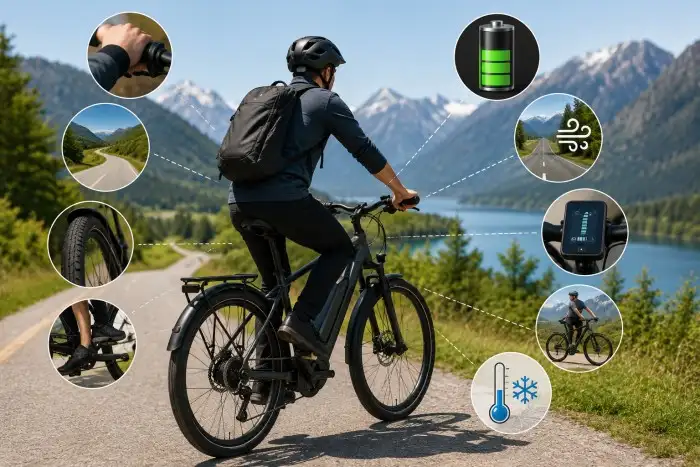
Strong headwinds create resistance similar to riding uphill. A windy day can significantly reduce your battery range, while tailwinds help conserve energy. If possible, plan longer rides with weather conditions in mind.
8. Outside Temperature
Lithium-ion batteries perform best in moderate temperatures. Cold weather temporarily reduces battery efficiency, which may shorten riding distance. Very hot weather can also affect long-term battery health if the battery is exposed to excessive heat for extended periods.
Whenever possible:
- Store batteries indoors.
- Avoid charging immediately after a freezing ride.
- Protect the battery from direct summer sunlight.
9. Riding Speed
Higher speeds require more energy. Maintaining a steady, moderate pace typically delivers better battery efficiency than frequent acceleration and high-speed riding. Smooth riding habits help extend overall range.
10. Stop-and-Go Traffic
Urban commuting often involves:
- Traffic lights
- Stop signs
- Heavy intersections
Every acceleration requires additional power from the motor. Long uninterrupted rides on bike paths or rural roads generally produce better battery performance than city riding.
11. Battery Age
Like smartphone and laptop batteries, e-bike batteries gradually lose capacity over time.
Most quality lithium-ion batteries last between:
- 500–1,000 charging cycles
After years of regular use, riders may notice shorter travel distances per charge. Proper maintenance can significantly slow this natural aging process.
How to Maximize Your E-Bike Battery Range
You don’t always need a larger battery to ride farther. Small changes in riding habits can noticeably improve efficiency.
Here are some practical tips:
- Ride in Eco mode whenever possible.
- Maintain proper tire pressure.
- Avoid unnecessary throttle use.
- Shift gears efficiently on hills.
- Reduce extra cargo weight.
- Keep the battery charged before long rides.
- Store batteries in a cool, dry location.
- Accelerate smoothly instead of rapidly.
- Clean and lubricate the drivetrain regularly.
- Plan routes with fewer steep climbs.
Choosing the Right E-Bike for Your Needs
Different riders require different battery capacities.
- Daily Commuters: A medium-capacity battery is often enough for commuting, errands, and weekend rides.
- Recreational Riders: Those who enjoy longer scenic rides may benefit from larger batteries that offer greater flexibility.
- Adventure Riders: If you frequently ride on trails, hills, or rough terrain, choosing an e-bike with a higher-capacity battery can provide extra confidence and reduce charging stops.
Manufacturers such as ACTBEST offer a variety of electric bikes designed for different riding styles, making it easier for riders to choose a model that matches their expected range, terrain, and daily travel needs.
Signs Your Battery Needs Attention
Watch for these indicators that your battery may require servicing or replacement:
- Noticeably shorter riding range
- Longer charging times
- Battery overheating
- Unexpected power loss
- Difficulty reaching a full charge
Regular inspections can help identify issues before they become major problems.
Frequently Asked Questions
How many miles can an electric bike travel on one charge?
Most electric bikes can travel between 20 and 80 miles, although premium models with larger batteries may exceed 100 miles under ideal conditions.
Does pedal assist increase battery range?
Yes. Pedal assist uses less battery power than throttle-only riding, allowing you to travel farther on a single charge.
Do hills reduce battery life?
Yes. Steep inclines require more motor power, which increases battery consumption and reduces overall range.
Can cold weather affect battery performance?
Yes. Cold temperatures temporarily reduce battery efficiency, which can shorten riding distance until the battery returns to a normal operating temperature.
How often should I charge my e-bike battery?
It’s best to recharge the battery after regular rides and avoid letting it remain fully discharged for extended periods. Following the manufacturer’s charging recommendations can help extend battery life.
Final Thoughts
An electric bike’s range is influenced by many factors beyond the size of its battery. Terrain, weather, riding style, motor settings, tire pressure, and overall maintenance all work together to determine how far you can travel on a single charge.
By understanding these factors and adopting efficient riding habits, you can maximize every ride while extending the lifespan of your battery. Whether you’re commuting across town or heading out for a weekend adventure, knowing how to manage battery range will help you ride farther with greater confidence and fewer charging stops.