Top Portfolio Diversification Strategies to Help Reduce Investment Risk

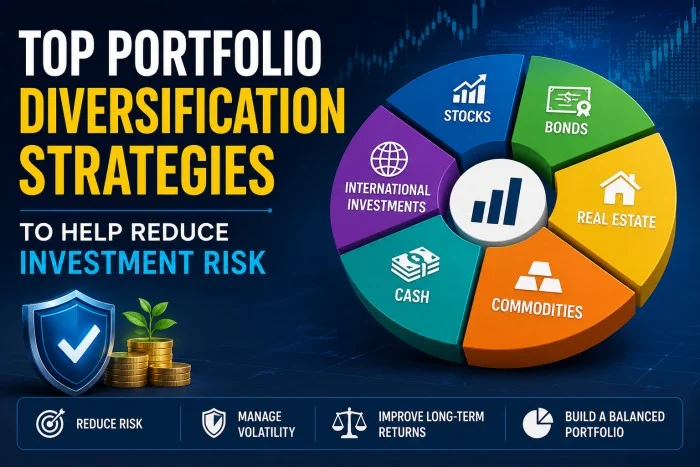
Investing is one of the most effective ways to build wealth over time, but every investment carries some level of risk. Market fluctuations, economic downturns, and unexpected global events can all impact your portfolio’s performance. One of the smartest ways to reduce these risks without sacrificing long-term growth potential is through portfolio diversification.
Diversification involves spreading your investments across different asset classes, industries, and geographic regions rather than relying on a single investment. While it cannot eliminate risk entirely, it helps reduce the impact of poor-performing investments and creates a more balanced portfolio.
This guide explores the most effective portfolio diversification strategies to help investors build a stronger financial foundation.
What Is Portfolio Diversification?
Portfolio diversification is the practice of investing in a variety of assets instead of putting all your money into one stock, sector, or investment type. The goal is to ensure that if one investment performs poorly, others may help offset those losses.
For example, if technology stocks decline but healthcare or consumer goods perform well, a diversified portfolio can experience less overall volatility.
Many experienced investors, including educational resources from The Motley Fool, emphasize diversification as a fundamental investing principle for managing long-term risk.
Why Diversification Matters
No investment consistently delivers strong returns every year. Markets move through different cycles, and industries respond differently to economic conditions.
A diversified portfolio can help you:
- Reduce exposure to a single investment.
- Minimize portfolio volatility.
- Improve long-term return potential.
- Better manage market downturns.
- Create a more stable investment experience.
Although diversification doesn’t guarantee profits, it can significantly reduce the likelihood of severe losses from a single investment.
Invest Across Multiple Asset Classes
One of the most important diversification strategies is spreading investments among different asset classes.
Common asset classes include:
- Stocks
- Bonds
- Real estate
- Cash or cash equivalents
- Commodities
- Exchange-Traded Funds (ETFs)
Each asset class reacts differently to market conditions. While stocks may experience significant price swings, bonds often provide more stability during uncertain markets.
Diversify Within Stocks
Buying multiple stocks isn’t enough if they all belong to the same industry.
Instead, spread investments across different sectors such as:
- Technology
- Healthcare
- Financial services
- Consumer goods
- Energy
- Industrials
- Utilities
- Telecommunications
This reduces the impact if one particular sector experiences a downturn.
Include Companies of Different Sizes
Company size also affects investment performance.
Consider investing in:
- Large-cap companies
- Mid-cap companies
- Small-cap companies
Large companies often provide stability, while smaller companies may offer higher growth potential but with greater risk. Combining all three creates a more balanced portfolio.
Invest Internationally
Many investors focus only on domestic markets. However, adding international investments can improve diversification.
International exposure may include:
- Developed markets
- Emerging markets
- International ETFs
- Global mutual funds
Different countries experience economic growth at different times, helping reduce dependence on one economy.
Use Exchange-Traded Funds (ETFs)
ETFs are among the easiest ways to diversify.
Instead of purchasing dozens of individual stocks, one ETF can provide exposure to hundreds or even thousands of companies.
Popular ETF categories include:
- Broad market ETFs
- International ETFs
- Bond ETFs
- Sector ETFs
- Dividend ETFs
- Index ETFs
They also tend to have lower management costs compared to many actively managed funds.
Balance Growth and Income Investments
A diversified portfolio should include investments designed for different objectives.
Growth investments aim for capital appreciation, while income investments generate regular cash flow.
Examples include:
Growth Assets
- Growth stocks
- Technology companies
- Emerging market funds
Income Assets
- Dividend-paying stocks
- Bonds
- REITs
- Income-focused ETFs
Balancing both can help reduce overall portfolio volatility.
Avoid Overconcentration
One common investing mistake is allowing a single investment to become too large.
For example:
- One stock represents 40% of the portfolio.
- Most investments are concentrated in one industry.
- The majority of assets are tied to one country’s economy.
Overconcentration increases risk because poor performance in one area can significantly impact the entire portfolio.
Rebalance Your Portfolio Regularly
As markets move, your portfolio allocation naturally changes.
For example:
- Stocks perform well and grow from 60% to 75% of your portfolio.
- Bonds decline from 40% to 25%.
Rebalancing restores your desired allocation by selling overweight investments and adding to underweighted ones.
Many investors review their portfolios every six to twelve months.

Consider Different Investment Styles
Diversification also includes investment strategies.
You may combine:
- Value investing
- Growth investing
- Dividend investing
- Index investing
- Income investing
Since different strategies perform better under different market conditions, combining them can improve overall portfolio resilience.
Maintain Adequate Liquidity
Not every investment should be tied up for years.
Keeping a portion of your portfolio in liquid assets allows you to:
- Handle emergencies.
- Take advantage of market opportunities.
- Avoid selling long-term investments during downturns.
Cash, money market funds, and short-term government securities can provide flexibility.
Understand Your Risk Tolerance
Diversification should match your personal financial goals and comfort with risk.
A younger investor with decades before retirement may allocate more to stocks, while someone nearing retirement may prefer a larger allocation to bonds and income-producing investments.
Your investment strategy should reflect:
- Age
- Income
- Financial goals
- Time horizon
- Ability to tolerate market fluctuations
Avoid Chasing Market Trends
Investors often rush into sectors that have recently performed well.
While popular investments can generate strong returns, concentrating too heavily in current market favorites may increase risk.
Maintaining a diversified portfolio encourages disciplined investing instead of reacting emotionally to short-term market movements.
Think Long Term
Diversification works best when combined with patience.
Markets experience corrections, recoveries, and periods of rapid growth. Investors who maintain diversified portfolios over many years are generally better positioned to navigate these market cycles than those constantly buying and selling based on short-term news.
Common Diversification Mistakes
Even experienced investors can make diversification errors.
Some common mistakes include:
- Owning too many similar investments.
- Investing only in one industry.
- Ignoring international markets.
- Failing to rebalance.
- Chasing recent market winners.
- Holding excessive cash for long periods.
- Assuming diversification eliminates all investment risk.
Recognizing these mistakes can help improve long-term portfolio performance.
Final Thoughts
Portfolio diversification remains one of the most effective strategies for reducing investment risk while supporting long-term financial growth. By spreading investments across asset classes, industries, company sizes, geographic regions, and investment styles, you can create a portfolio that is better equipped to withstand market uncertainty.
While no investment strategy can guarantee profits or completely eliminate losses, a well-diversified portfolio helps reduce unnecessary risk and encourages more consistent long-term investing. Regular portfolio reviews, disciplined rebalancing, and a focus on long-term objectives can further strengthen your investment strategy over time.