Which Cooking Oil Is Best for Frying, Roasting, and Baking? A Smoke Point Guide

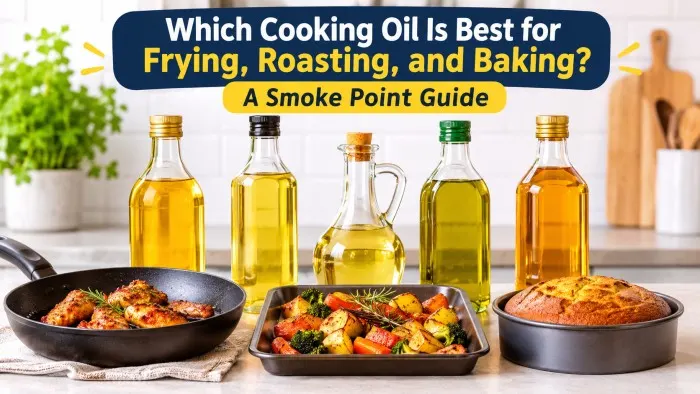
Choosing the right Cooking Oil can make a noticeable difference to the flavour, texture, and quality of homemade meals. Some oils work well for high-temperature frying, while others are better suited to roasting vegetables or baking cakes. One important factor to consider is the smoke point: the temperature at which an oil begins to produce visible smoke. Understanding smoke points, flavour profiles, and cooking methods makes it easier to select an oil that suit0s each recipe.
What Is a Smoke Point and Why Does It Matter?
A smoke point is the temperature at which an oil starts to smoke continuously. When oil is heated beyond this point, it can develop an unpleasant burnt flavour and begin to break down. This may affect the taste and quality of the food being prepared.
Different oils have different smoke points depending on their source, processing method, and level of refinement. Refined oils generally have higher smoke points than unrefined or extra-virgin varieties because processing removes some impurities and compounds that can burn at lower temperatures. However, smoke point is not the only factor worth considering. Flavour, fatty acid composition, freshness, and the cooking technique all influence which oil is most suitable.
Best Oils for Deep-Frying and High-Temperature Cooking
Deep-frying requires an oil that can handle sustained high temperatures without smoking too quickly. Neutral flavour is also useful because it allows the taste of the food to remain the main focus.
Refined sunflower oil is a popular option for frying because it has a relatively high smoke point and a mild flavour. It works well for chips, fritters, battered vegetables, and other fried foods. Its neutral taste makes it suitable for recipes where the oil should not overpower the ingredients.
Refined peanut oil is another option for high-temperature cooking. It has a high smoke point and a light nutty flavour, making it suitable for frying and stir-frying. However, it should be avoided by people with peanut allergies unless the product is specifically confirmed to be safe for them.
Refined canola oil, also known as rapeseed oil, is a versatile choice. It has a mild flavour and is suitable for frying, sautéing, and everyday cooking. Its relatively high smoke point makes it practical for recipes that require consistent heat.
Best Oils for Roasting Vegetables and Meat
Roasting usually involves heating food in an oven at moderate to high temperatures. The ideal oil should tolerate the required heat while helping ingredients develop a crisp exterior and appealing flavour.
Olive oil is a useful option for roasting vegetables, potatoes, chicken, and other savoury dishes. Regular or refined olive oil generally has a higher smoke point than extra-virgin olive oil. Extra-virgin olive oil can also be used for many everyday roasting recipes, depending on the oven temperature and product quality. Its distinctive flavour works particularly well with Mediterranean ingredients.
Avocado oil is another suitable choice, particularly in its refined form. It has a high smoke point and a relatively neutral flavour, making it useful for roasting vegetables and meat at higher temperatures. It can be more expensive than common household oils, so it may be better reserved for recipes where its properties are especially useful.
Rapeseed oil is also practical for roasting because of its mild taste and versatility. A light coating can help vegetables brown evenly without adding a strong flavour.
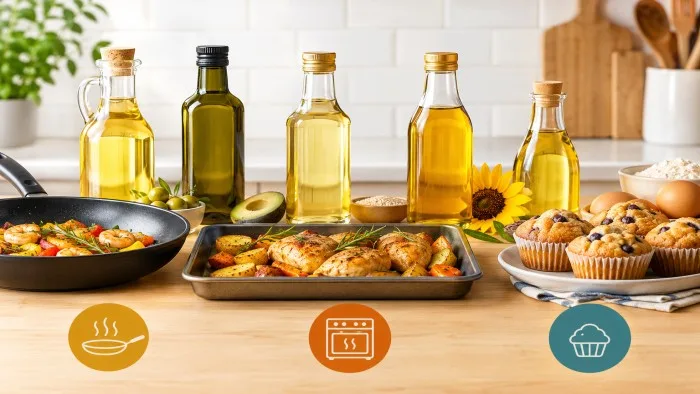
Which Oils Work Best for Baking?
Baking requires oils that provide moisture, tenderness, and a suitable texture. Unlike deep-frying, the smoke point is not always the main consideration because the oil is usually mixed into batter or dough rather than heated directly in a pan.
Sunflower oil is a reliable choice for cakes, muffins, brownies, and quick breads. Its neutral flavour allows ingredients such as chocolate, vanilla, fruit, and spices to stand out. It also helps create a soft, moist texture.
Light olive oil can work well in savoury breads, muffins, and some cakes. Its flavour is milder than extra-virgin olive oil, making it a practical option when a recipe needs oil without a noticeable olive taste.
Coconut oil is useful in certain baking recipes, particularly those that benefit from a subtle coconut flavour or a firmer texture when cooled. It is solid at cooler room temperatures, so it may need melting before being incorporated into a mixture. Its distinct taste should be considered when choosing recipes.
When substituting oil for butter, remember that the two ingredients behave differently. Butter contains water and milk solids, while oil is almost entirely fat. Substitutions may therefore change a recipe’s texture and structure.
Comparing Common Cooking Oils
Here is a general guide to the approximate smoke points of commonly used oils. Actual values vary according to refinement, quality, and processing.
| Oil | Approximate smoke point | Suitable uses |
| Refined sunflower oil | 225–230°C | Frying, roasting, baking |
| Refined peanut oil | 225–230°C | Deep-frying, stir-frying |
| Refined canola oil | 200–230°C | Frying, roasting |
| Extra-virgin olive oil | 190–210°C | Light sautéing, roasting |
| Refined olive oil | 220–240°C | Roasting, frying |
| Refined avocado oil | 250–270°C | High-heat cooking |
| Coconut oil | 175–230°C | Baking, light cooking |
These figures are approximate rather than fixed guarantees. Always check the product label and follow the manufacturer’s guidance.
How to Choose and Store Oil Properly
The best choice depends on the dish, cooking temperature, and flavour you want. For everyday frying, refined sunflower or canola oil can be practical options. Olive oil is useful for roasting, while sunflower and light olive oils can work well in many baked goods.
Storage also matters. Heat, light, and air can cause oils to deteriorate over time. Keep bottles tightly closed in a cool, dark cupboard and avoid storing them beside the oven. Follow the use-by guidance on the packaging and discard oil that smells rancid or has an unusual appearance. When shopping through retailers such as Ocado, comparing labels, oil types, and bottle sizes can help you find an option that suits your regular cooking habits.
Making the Right Choice for Every Recipe
There is no single oil that is ideal for every cooking method. High-temperature frying benefits from refined oils with higher smoke points, roasting allows more flexibility with flavourful options, and baking often calls for neutral oils that provide moisture. By understanding these differences, you can choose suitable oils for individual recipes, improve the results of everyday meals, and make more confident decisions in the kitchen.