Seasonal Bird Feeding Guide: What to Offer in Spring, Summer, Autumn, and Winter

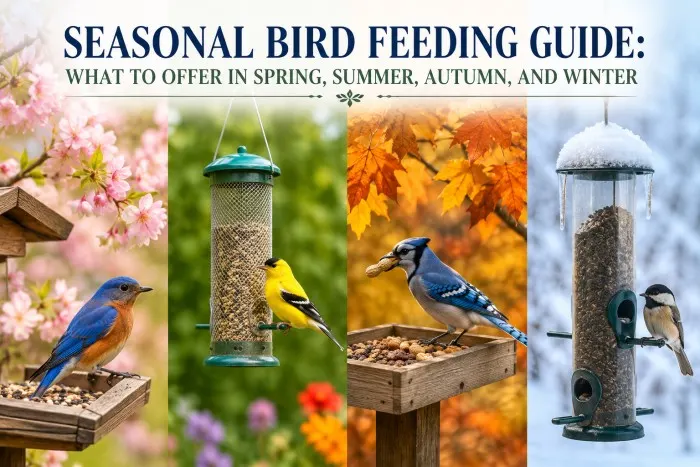
Bird feeding is one of the simplest and most rewarding ways to support local wildlife throughout the year. Different seasons bring changes in weather, food availability, and the nutritional needs of birds. By adjusting what you offer at your feeders, you can attract a wider variety of species while helping birds thrive during each stage of the year.
Whether you’re an experienced bird enthusiast or just starting out, this seasonal guide will help you understand what foods birds need in spring, summer, autumn, and winter.
Why Seasonal Feeding Matters
Birds face different challenges throughout the year. During spring, they need energy for nesting and raising young. Summer brings higher activity levels and growing chicks. Autumn is a crucial time for building fat reserves before migration or winter, while winter often presents food shortages and harsh weather conditions.
Providing appropriate foods during each season can help birds maintain their health and improve their chances of survival.
Spring: Supporting Nesting and Breeding Birds
Spring is one of the busiest seasons for birds. As temperatures rise, many species begin nesting and raising chicks. Adult birds require extra energy, while young birds need protein-rich foods for healthy growth.
Best Foods for Spring
- Black oil sunflower seeds
- Mealworms
- Nyjer seeds
- Unsalted peanuts
- High-quality bird seed mixes
Mealworms are especially valuable during spring because they provide protein that helps parent birds feed their growing chicks.
Feeding Tips for Spring
- Clean feeders regularly to prevent disease.
- Refill feeders frequently as bird activity increases.
- Provide fresh water for drinking and bathing.
- Place feeders near shrubs or trees for shelter.
Birds Commonly Seen in Spring
You may attract:
- Robins
- Blue tits
- Finches
- Sparrows
- Blackbirds
Summer: Fueling Active Birds
Summer brings long days and increased feeding activity. Adult birds continue caring for fledglings while many young birds learn to forage independently.
Best Foods for Summer
- Sunflower hearts
- Mealworms
- Millet
- Crushed peanuts
- Fruit pieces such as apples and berries
Fresh fruit can attract species that might not regularly visit seed feeders.
Feeding Tips for Summer
- Keep feeders in shaded areas when possible.
- Change water daily during hot weather.
- Remove spoiled food promptly.
- Avoid offering foods that melt or spoil quickly.
Additional Water Sources
Bird baths become particularly important during summer. Birds use them not only for drinking but also for cooling down and maintaining healthy feathers.
Autumn: Preparing for Migration and Winter
Autumn is a critical period for many birds. Migratory species need extra energy before long journeys, while resident birds begin building fat reserves to survive colder months.
Best Foods for Autumn
- Sunflower seeds
- Peanuts
- Suet pellets
- Mixed seed blends
- Oats and grains
Foods rich in fats and oils help birds accumulate the energy reserves they need.
Feeding Tips for Autumn
- Increase feeder capacity if possible.
- Offer a variety of foods to attract different species.
- Continue providing clean water.
- Inspect feeders for wear before winter arrives.
Birds Commonly Seen in Autumn
You may notice:
- Goldfinches
- Thrushes
- Starlings
- Chaffinches
- Migratory visitors passing through your area
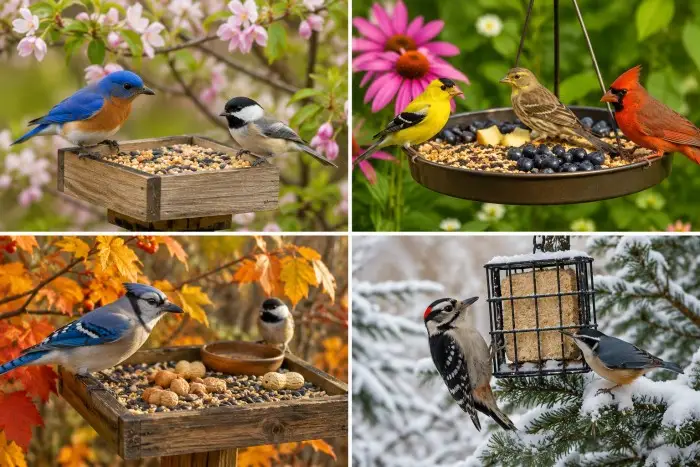
Winter: Helping Birds Through the Toughest Season
Winter can be the most challenging season for birds. Natural food sources become scarce, daylight hours shorten, and cold temperatures increase energy demands.
Best Foods for Winter
- Suet cakes
- Fat balls
- Sunflower seeds
- Peanuts
- High-energy seed mixes
These foods provide concentrated calories that help birds maintain body heat during freezing conditions.
Feeding Tips for Winter
- Refill feeders early in the morning.
- Keep feeders clear of snow and ice.
- Ensure water sources do not freeze.
- Offer multiple feeding stations to reduce competition.
Birds Commonly Seen in Winter
Depending on your location, you may attract:
- Tits
- Nuthatches
- Woodpeckers
- Sparrows
- Wintering finches
Foods to Avoid
Not all foods are safe for birds. Avoid offering:
- Salty snacks
- Moldy bread
- Chocolate
- Processed foods
- Foods containing artificial sweeteners
These items can be harmful and provide little nutritional value.
Maintaining Healthy Feeders Year-Round
Regardless of the season, hygiene is essential.
Best Practices
- Clean feeders every one to two weeks.
- Remove wet or spoiled food.
- Disinfect feeders periodically.
- Keep feeding areas tidy.
Regular maintenance helps prevent the spread of disease and ensures birds can feed safely.
Choosing Quality Bird Food
Selecting high-quality bird food can make a significant difference in attracting birds and supporting their health. Retailers such as Ocado offer a variety of bird feeding products, seeds, and wildlife supplies suitable for year-round feeding needs.
Final Thoughts
Seasonal bird feeding is about more than simply filling a feeder. By understanding the changing nutritional needs of birds throughout the year, you can provide the right foods at the right time. Spring calls for protein-rich options, summer emphasizes hydration and growth, autumn focuses on energy storage, and winter demands high-calorie foods that help birds survive harsh conditions.
With a thoughtful seasonal feeding strategy, your garden can become a reliable refuge for birds throughout the year, rewarding you with regular visits from a diverse range of fascinating species.