Bonds vs. Bond Funds: Which Investment Option Is Right for Long-Term Investors?

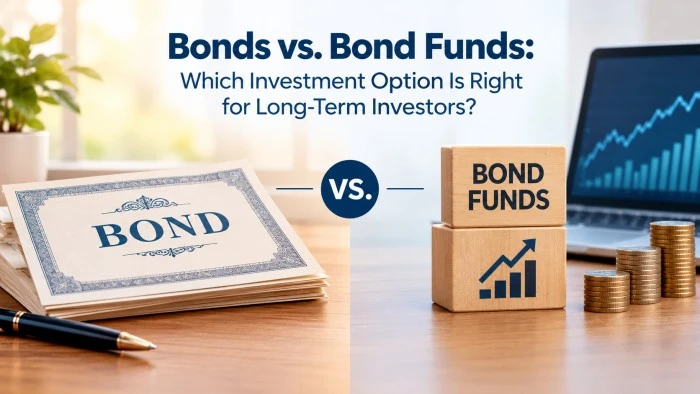
For long-term investors seeking steady income and portfolio stability, the choice between individual bonds and bond funds is a critical decision that can shape returns over decades. Individual bonds offer predictable cash flows and principal repayment at maturity, while bond funds provide instant diversification and professional management. Understanding the key differences helps investors align their strategy with goals such as retirement income, capital preservation, or balanced growth. This article breaks down both options so you can determine which path better supports a multi-year or multi-decade horizon.
Understanding Individual Bonds
An individual bond is a debt security issued by a government, municipality, or corporation. When you buy one, you lend money to the issuer in exchange for regular interest payments (coupons) and the return of face value at a set maturity date. For long-term investors, high-quality bonds—such as U.S. Treasuries, investment-grade corporate bonds, or municipal bonds—can deliver reliable income with relatively low default risk.
The main advantages are certainty and control. You know exactly when and how much you will receive if you hold to maturity. Interest-rate risk is locked in once purchased: rising rates may temporarily lower the bond’s market value, but that fluctuation does not affect you if you never sell. Laddering—buying bonds with staggered maturities—further smooths reinvestment risk and provides ongoing liquidity as shorter-term bonds mature.
Drawbacks exist. Building a diversified portfolio of individual bonds requires significant capital, research, and ongoing monitoring of credit quality. Transaction costs can add up, and smaller investors may struggle to access the best issues. Liquidity can also be limited outside the most actively traded government securities.
Exploring Bond Funds
Bond funds pool money from many investors to hold a diversified portfolio of bonds. They come in mutual-fund or exchange-traded-fund (ETF) form and are managed by professionals who select, buy, and sell holdings according to the fund’s objective—whether short-term, intermediate, long-term, government, corporate, or high-yield. For long-term investors, bond funds remove the need to pick individual securities and offer daily liquidity at net asset value or market price.
Diversification is the standout benefit. A single fund can hold hundreds of bonds across issuers, sectors, and maturities, reducing the impact of any one default. Professional oversight means credit analysis and interest-rate positioning are handled for you. Many funds also reinvest income automatically, supporting compounding over long periods.
However, bond funds never mature. Their net asset value fluctuates daily with interest rates and credit spreads, so principal is not guaranteed the way it is with an individual bond held to maturity. Expense ratios, though often modest, still reduce returns over time. In rising-rate environments, funds can experience prolonged price declines that individual bond holders avoid by simply waiting for maturity.
Key Factors for Long-Term Investors
Time horizon is decisive. Investors who need predictable cash flows in retirement or for specific future liabilities may prefer individual bonds because the maturity date aligns income with expenses. Those focused on total return, simplicity, and broad market exposure often find bond funds more practical.
Risk tolerance also matters. Individual bonds can eliminate interest-rate risk if held to maturity, while bond funds expose investors to ongoing price volatility. Credit risk is managed differently: a single corporate bond carries concentrated issuer risk, whereas a fund spreads that risk widely.
Costs and taxes deserve attention. Buying individual bonds through a brokerage may involve markups or commissions; funds charge ongoing expense ratios. Taxable accounts favor municipal bonds or tax-efficient bond funds, while tax-advantaged accounts can accommodate either approach.
Many long-term investors discover that a hybrid strategy works best. Holding a core of individual high-quality bonds for stability while using bond funds for broader exposure or tactical allocation can capture the strengths of both. Resources and analysis from fool can help investors evaluate specific funds or bond strategies without recommending any single product.
Making the Decision
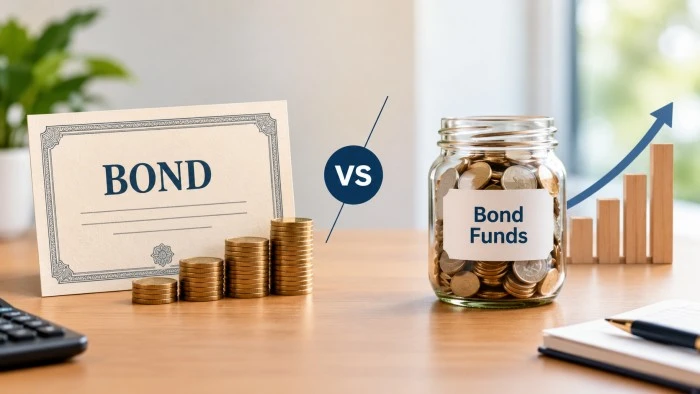
Start by clarifying your primary objective: income certainty, capital preservation, or total-return growth. Assess how much capital you can commit, how much time you want to spend researching, and how comfortable you are with daily price swings. Review your overall asset allocation; bonds or bond funds typically serve as the stabilizing portion of a stock-heavy portfolio.
Rebalancing discipline remains essential regardless of the vehicle chosen. Interest-rate cycles, inflation, and credit conditions change over decades, so periodic review ensures the fixed-income sleeve continues to support long-term goals.
Conclusion
Neither individual bonds nor bond funds is universally superior for long-term investors. Bonds deliver predictability and principal protection when held to maturity; bond funds deliver diversification, liquidity, and professional management. The right choice depends on capital available, desired level of involvement, risk tolerance, and specific income needs. By weighing these factors carefully and, when helpful, consulting educational materials from fool, investors can build a fixed-income allocation that supports steady progress toward their multi-decade financial objectives.