
Stuttgart Travel Guide: Exploring Car Museums, Historic Palaces, and Green Parks


Stuttgart combines engineering heritage, elegant architecture, and generous green space in a compact, walkable setting. This stuttgart travel guide focuses on the city’s world-class car museums, historic palaces, and parks so visitors can experience its main strengths without a rushed itinerary.
Car Museums: Engineering as Culture
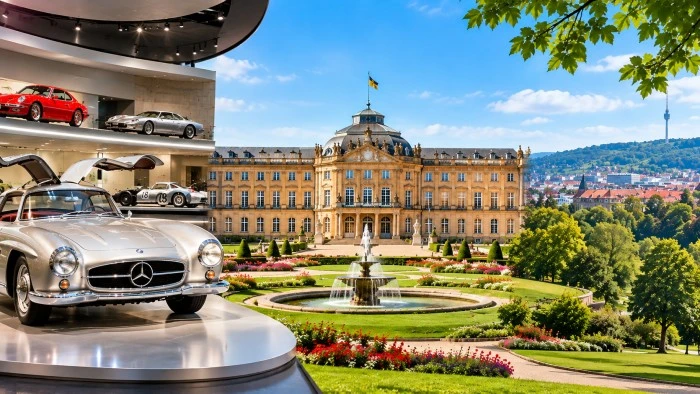
Stuttgart is closely tied to the automobile, and two major museums make that heritage accessible and engaging. The Mercedes-Benz Museum is a highlight for most visitors. Its modern architecture and chronological exhibition trace the story of the brand and of mobility itself, from early inventions to contemporary designs. Interactive displays and carefully staged vehicles keep the experience varied, even for people who are not car enthusiasts. Allow plenty of time; the collection is large and well presented.
The Porsche Museum offers a different perspective. Its focused collection and sleek building emphasize design, performance, and brand history. The museum is relatively compact compared with Mercedes-Benz, which makes it easier to absorb in a shorter visit. Together, the two museums give a clear picture of why Stuttgart is central to automotive history.
Both sites are reachable by public transport, and combining them in one day is possible if you start early and move efficiently. Comfortable shoes and a flexible schedule help, as the exhibits invite lingering.
Historic Palaces and Royal Legacy
Beyond industry, Stuttgart retains the imprint of its royal past. The New Palace (Neues Schloss) dominates the central Schlossplatz with its baroque presence. Although much of the building serves official functions, the square itself is a natural gathering point and a useful orientation landmark in the city center.
Nearby, the Old Castle (Altes Schloss) houses the Landesmuseum Württemberg, where regional history and cultural collections provide context for the area’s development. The surrounding courtyards and passages reward a slower pace and connect easily to shopping streets and cafés.
A short journey outside the immediate center leads to Ludwigsburg Palace, one of the largest baroque residences in Germany. Its elaborate interiors, gardens, and scale make it a strong half-day excursion for visitors interested in historic architecture. Even without traveling to Ludwigsburg, the central palaces and squares give a clear sense of Stuttgart’s former courtly life.
Green Parks and Outdoor Breathing Room
Stuttgart’s hilly setting and planning tradition have preserved substantial green spaces within and around the urban core.
The Schlossgarten stretches from the city center toward the Neckar side, offering tree-lined paths, open lawns, and an easy escape from traffic. It links cultural buildings and provides a pleasant route for walking between sights. In warm weather, locals use the park for picnics, reading, and informal recreation.
Wilhelma, Stuttgart’s zoological and botanical garden, combines animal exhibits with historic architecture and extensive plant collections. It is one of the city’s most popular attractions and works well for families as well as adult visitors who enjoy gardens. The site is large, so prioritising a few sections often leads to a more relaxed visit.
Higher ground at places such as Killesberg Park adds broader views and additional room to walk. The city’s hills mean that even short climbs can open up perspectives over rooftops and valleys, reinforcing Stuttgart’s reputation as a green metropolis.
Practical Tips for Structuring a Visit
Public transport is reliable and connects museums, the center, and major parks. A day ticket or short-visit pass usually simplifies travel between the Mercedes-Benz Museum, Porsche Museum, and central districts. Walking is realistic within the core, especially around Schlossplatz, the Old Castle, and the main stretches of the Schlossgarten.
Many visitors combine one major museum with palace architecture and an afternoon in a park. Others dedicate a full day to the two car museums and keep the following day for historic sites and green space. Either approach works if you avoid over-packing the schedule. Onthebeach features travel options that can include Stuttgart as a city break or as part of a wider German itinerary, which is useful when coordinating flights and short stays.
Food and Local Rhythm
Between sights, Stuttgart’s cafés and bakeries make easy stopovers. Regional specialties and seasonal market offerings appear in and around the center. Evenings are often quieter than in larger party-oriented cities, which suits travelers who prefer a calmer pace after a day of museums and walking.
Final Thoughts
Stuttgart rewards visitors who balance its three strongest cards: automotive museums of international calibre, historic palaces and squares that recall its royal past, and green parks that soften the urban landscape. By focusing on these elements and moving between them without haste, travelers gain a clear and satisfying picture of a city that is both industrious and liveable. Whether you come for the cars, the architecture, or the open spaces, Stuttgart delivers each with clarity and quality.





1 Comment
Bir uzmanla ilk kez görüşmeyi düşünen kişiler, genellikle nereden başlayacağını bilemeyebiliyor. Online psikolog seçerken yalnızca ücret veya müsait saat bilgisine odaklanmak yerine uzmanın eğitim geçmişine ve ilgilendiği alanlara bakmak daha sağlıklı olur. Online terapi sürecinin başında beklentileri konuşmak, görüşmelerin amacı konusunda karşılıklı anlayış geliştirilmesine yardımcı olabilir. İlk seansta her konuyu anlatmak zorunda olmadığınızı bilmek de rahatlatıcıdır. Uzman profillerini ve görüşme imkanlarını karşılaştırmak için https://psikolojiden.com/ incelenebilir. Psikolojik destek kişiye özel ilerlediğinden görüşme sıklığı ve çalışma hedefleri zaman içinde değişebilir. Önemli olan güvenli, saygılı ve profesyonel bir iletişim kurulmasıdır. Bu yaklaşım danışanın süreçte daha aktif ve bilinçli kalmasını uzun vadede de destekler.